


Community
Learning & mobility
Let us read his thoughts on this visit inRobert's own words:
As soon as the opportunity to use the VAHA Learning and Mobility Grant appeared, I made a thorough research on where and in what cultural space I would like to go. Reading carefully the VAHA Hubs projects, one in particular caught my attention: The Interwoven Narratives Hub.They were implementing a brave project across the line, trying to bring people together from both parts of the island, exploring the idea that culture can re-unite communities. Coming from a country where, unfortunately, the gap among the two largest communities exists, but luckily the boundaries are still only imaginary, I was so excited to get to know all the organizations better and what they are actually doing.
It was my third visit to Cyprus, but this time I was all on my own, not bound by a formal institutional framework, which can sometimes blur or hide, or just avoid some important references.
My first destination was Limassol, the most vibrant city, where diversity flows like lava, everywhere. The pale complexity of Ukrainians, Russians, Brits, and other tourists and businesspersons scrolling over the long pedestrian area was interrupted by the mixed presence of Bangladeshi people, Sikhs, Indians, and Nepalese, selling typical Asian products, local and exotic fruits and vegetables, or hurrying with their big Volt take-away bags. Mixing with the domestic Cypriots supporting the city’s daily assortment of needs (car wash, car repair, heating and cooling systems, xerox, barbers, supply of all possible kinds), or smiling from the taverns.
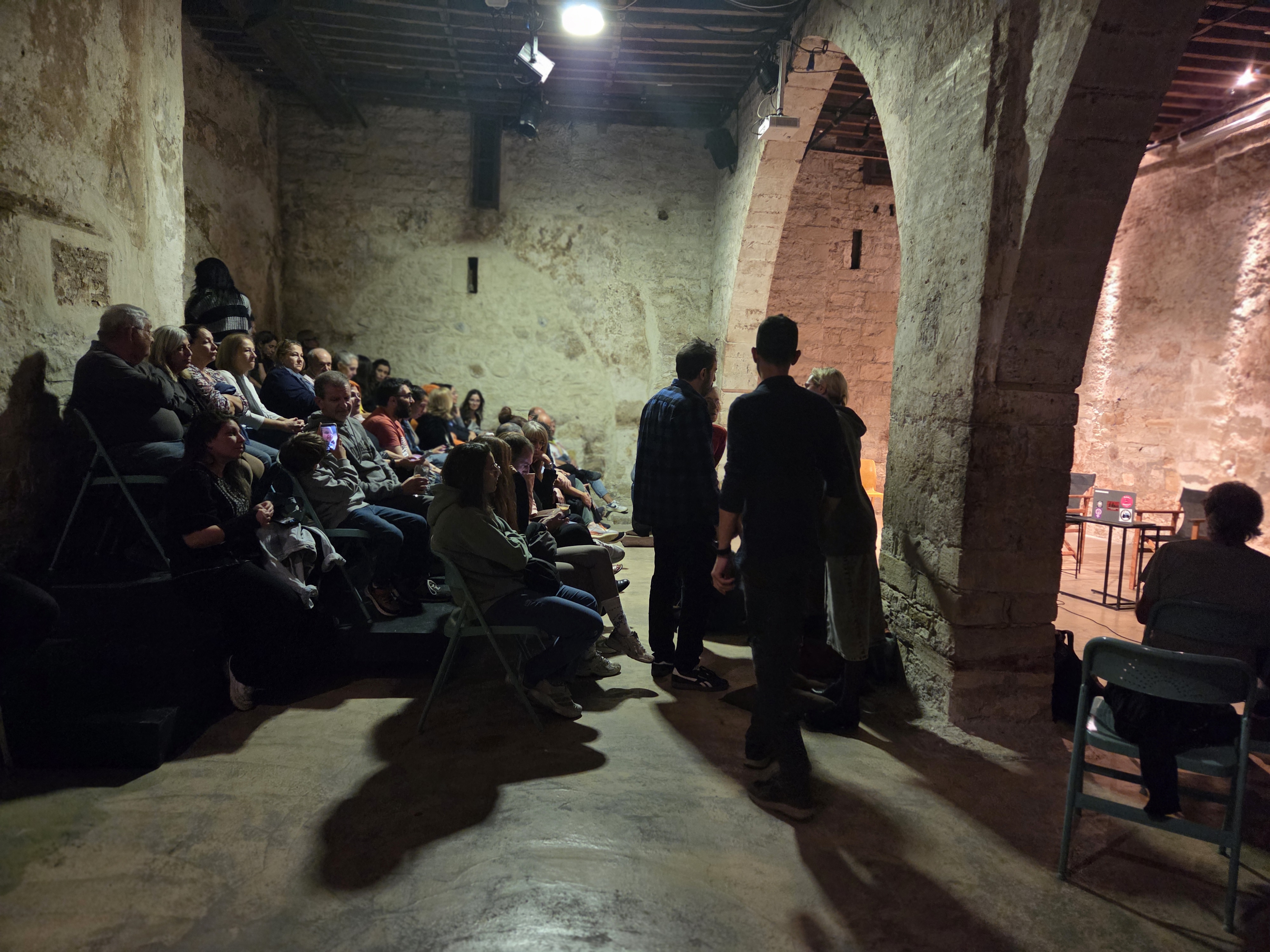
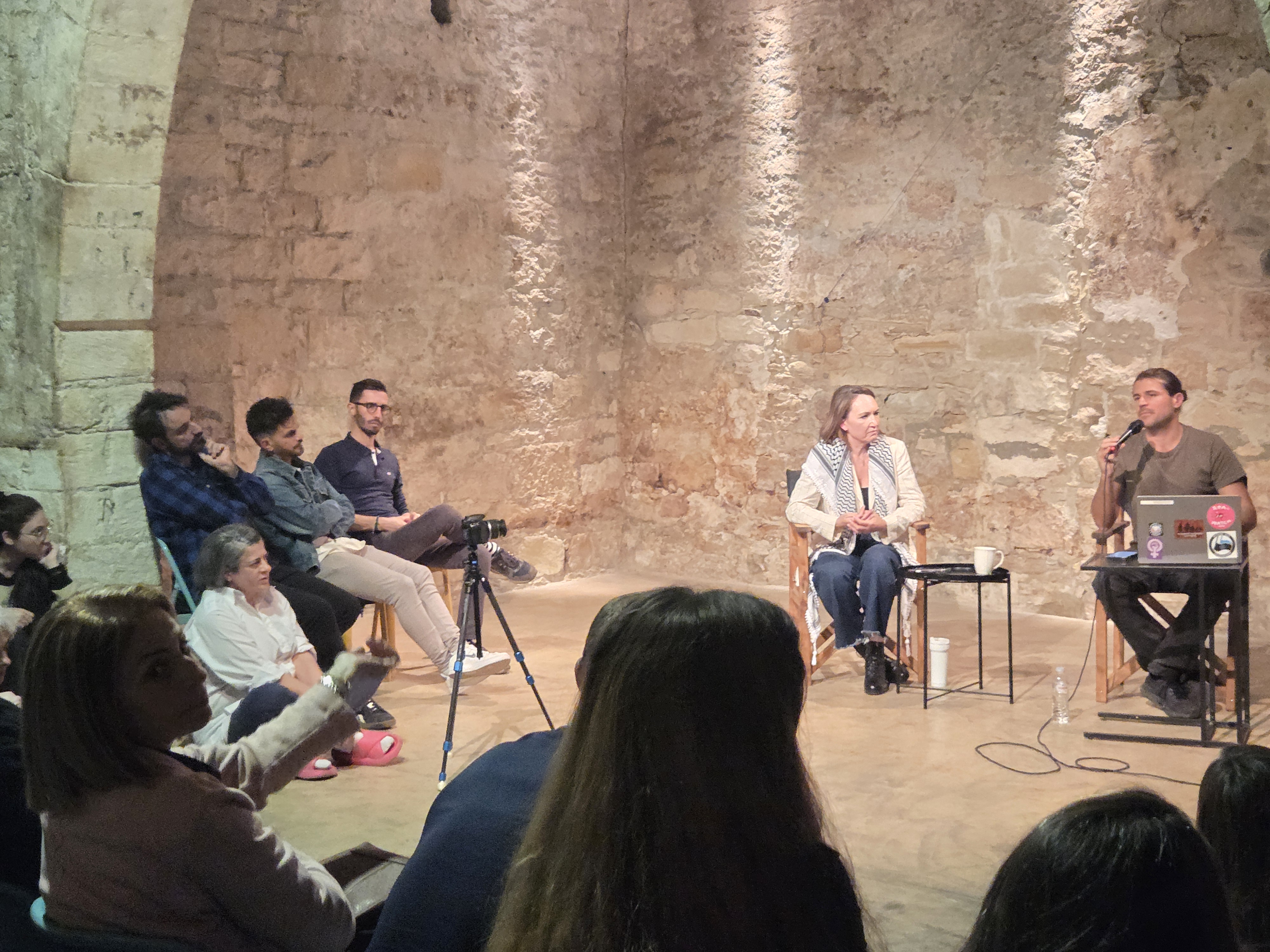
The historical core of the city, where polished remains of Byzantine, Frankish, Venetian, and Ottoman heritage blend with traditional cuisine, invites visitors to get a deeper taste not only of the dishes but also of the culture behind them. And yet, amidst those typical tourist zones, there are enclaves of contemporary cultural spaces, tiny in square meters but abundant in cultural offer, and attended by a diverse range of audiences. Mitos hosted a conversation event on the night of my visit, so not only did I have the opportunity to learn from Elena A. about their organization’s vision and program, but also to witness how they are doing it. They are well rooted in the intellectual and cultural vibe of the city, and the audiences responded well to the event, creating an atmosphere of joy and warmth, but also concern over the raging conflicts in their neighborhood, just across the narrow sea.
The way to Famagusta led me through the capital, Nicosia, where the frozen state of the conflict is most visible. It is easy to cross to the other side of the divided city through the friendly arranged checkpoints. But in the urban texture, the scars of the past pass through a rough and clear line of deserted objects, cut-off streets, and torn-apart buildings. Even the dirtiest businesses have been erected near the cold observation points — chemical workshops, metal processing studios, mechanic stores. Yet, the number of shiny hostels, innovation hubs, and creative industries centers is booming all around the old chaps. Even they cannot resist the new age, offering a splendid cat hotel just next to the heavy woodcraft workshop.
Modern urban life around the city core pulsates almost in one breath. A place like Yalla is just a few streets and a checkpoint away from its twin club, Hoi Poloi.
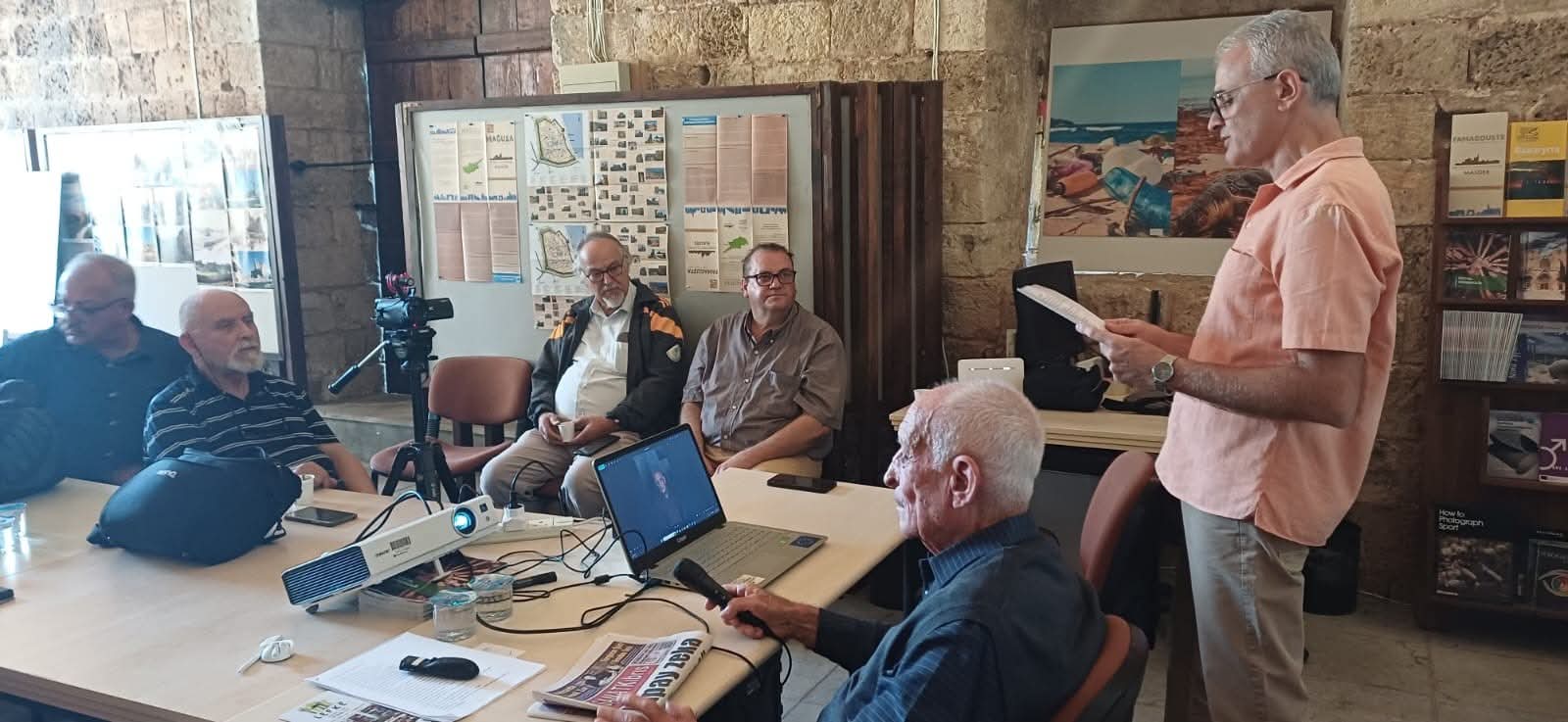
Famagusta, a city and area I visited for the first time ever, was the crown of my trip. A deep Venetian heritage lurks all over the old town, with protection measures, museums, tours, and place guides still not adequate enough for its rich potential. My host was Serdar from Masder, one of the striking enthusiasts whose pulse for cultural enrichment, heritage protection, and community events runs 24/7.
Serdar, like almost all the people I met, has bad memories, even nightmares, from the big conflict. They could easily choose the road of more hatred, more rage, and a wish for revenge and retribution. And yet, he, as well as many others I met, is full of patience, hope, understanding, and a wish to overcome the past. He strongly believes in intercultural dialogue, in peace, and in all the advantages that diversity and reunion bring. It is deep in his upbringing, and it is also a vow to his late parents. So his NGO, Masder, is doing alternative guided tours, collecting personal histories, creating intercultural encounters, running heritage protection projects, greening public spaces, creating new art and cultural hubs, and supporting cultural professionals and amateurs across age groups. His stubborn cross-cultural enthusiasm infected me for life.
It was an exciting learning mobility during my seven days through four different cities and a few passings-by. The impression I am carrying home is that the mentality, the capability to deal with diversity, and the openness to the Other are natural to the country. Cultural people like Elena, Serdar, Constantia, Michalis, Eralp, Tatiana, and Kelly can lead the critical mass of people that exists on the island to overcome the traumatic scar from the previous century. It is visible, but dry. Culture can help to rub it away.
Across the divide
09.01.2026
It was my third visit to Cyprus, but this time I was all on my own, not bound by a formal institutional framework, which can sometimes blur or hide, or just avoid some important references.
On November 2025, Robert Alagjozovski from NGO Esperanza World Culture Center visited the Interwoven Narratives hub partners, a collaboration between NGOs from Famagusta (Walled City Association Masder and Famagusta New Museum) and Limassol (Mitos Performance Arts Center), in Cyprus.Let us read his thoughts on this visit inRobert's own words:
As soon as the opportunity to use the VAHA Learning and Mobility Grant appeared, I made a thorough research on where and in what cultural space I would like to go. Reading carefully the VAHA Hubs projects, one in particular caught my attention: The Interwoven Narratives Hub.They were implementing a brave project across the line, trying to bring people together from both parts of the island, exploring the idea that culture can re-unite communities. Coming from a country where, unfortunately, the gap among the two largest communities exists, but luckily the boundaries are still only imaginary, I was so excited to get to know all the organizations better and what they are actually doing.
It was my third visit to Cyprus, but this time I was all on my own, not bound by a formal institutional framework, which can sometimes blur or hide, or just avoid some important references.
My first destination was Limassol, the most vibrant city, where diversity flows like lava, everywhere. The pale complexity of Ukrainians, Russians, Brits, and other tourists and businesspersons scrolling over the long pedestrian area was interrupted by the mixed presence of Bangladeshi people, Sikhs, Indians, and Nepalese, selling typical Asian products, local and exotic fruits and vegetables, or hurrying with their big Volt take-away bags. Mixing with the domestic Cypriots supporting the city’s daily assortment of needs (car wash, car repair, heating and cooling systems, xerox, barbers, supply of all possible kinds), or smiling from the taverns.
The historical core of the city, where polished remains of Byzantine, Frankish, Venetian, and Ottoman heritage blend with traditional cuisine, invites visitors to get a deeper taste not only of the dishes but also of the culture behind them. And yet, amidst those typical tourist zones, there are enclaves of contemporary cultural spaces, tiny in square meters but abundant in cultural offer, and attended by a diverse range of audiences. Mitos hosted a conversation event on the night of my visit, so not only did I have the opportunity to learn from Elena A. about their organization’s vision and program, but also to witness how they are doing it. They are well rooted in the intellectual and cultural vibe of the city, and the audiences responded well to the event, creating an atmosphere of joy and warmth, but also concern over the raging conflicts in their neighborhood, just across the narrow sea.
The way to Famagusta led me through the capital, Nicosia, where the frozen state of the conflict is most visible. It is easy to cross to the other side of the divided city through the friendly arranged checkpoints. But in the urban texture, the scars of the past pass through a rough and clear line of deserted objects, cut-off streets, and torn-apart buildings. Even the dirtiest businesses have been erected near the cold observation points — chemical workshops, metal processing studios, mechanic stores. Yet, the number of shiny hostels, innovation hubs, and creative industries centers is booming all around the old chaps. Even they cannot resist the new age, offering a splendid cat hotel just next to the heavy woodcraft workshop.
Modern urban life around the city core pulsates almost in one breath. A place like Yalla is just a few streets and a checkpoint away from its twin club, Hoi Poloi.
Famagusta, a city and area I visited for the first time ever, was the crown of my trip. A deep Venetian heritage lurks all over the old town, with protection measures, museums, tours, and place guides still not adequate enough for its rich potential. My host was Serdar from Masder, one of the striking enthusiasts whose pulse for cultural enrichment, heritage protection, and community events runs 24/7.
Serdar, like almost all the people I met, has bad memories, even nightmares, from the big conflict. They could easily choose the road of more hatred, more rage, and a wish for revenge and retribution. And yet, he, as well as many others I met, is full of patience, hope, understanding, and a wish to overcome the past. He strongly believes in intercultural dialogue, in peace, and in all the advantages that diversity and reunion bring. It is deep in his upbringing, and it is also a vow to his late parents. So his NGO, Masder, is doing alternative guided tours, collecting personal histories, creating intercultural encounters, running heritage protection projects, greening public spaces, creating new art and cultural hubs, and supporting cultural professionals and amateurs across age groups. His stubborn cross-cultural enthusiasm infected me for life.
It was an exciting learning mobility during my seven days through four different cities and a few passings-by. The impression I am carrying home is that the mentality, the capability to deal with diversity, and the openness to the Other are natural to the country. Cultural people like Elena, Serdar, Constantia, Michalis, Eralp, Tatiana, and Kelly can lead the critical mass of people that exists on the island to overcome the traumatic scar from the previous century. It is visible, but dry. Culture can help to rub it away.
Share:

 Share:
Share:
