



Community
Learning & mobility
inventing narratives, weaving (sub)connections
22.06.2026
Elena Agathokleous from MITOS visited Istanbul, Türkiye in February 2026 as part of the VAHA Learning and Mobility Grant. Let's hear her reflections on the journey from her directly:
My journey to Istanbul was the natural continuation of the synergy of the Interwoven Narratives Hub (Famagusta New Museum, Center of Performing Arts MITOS, Famagusta Walled City MASDER), which we developed within the framework of the Vaha III program during 2025. We recorded stories of social life of displaced Turkish Cypriots from Limassol and Greek Cypriots from Famagusta prior to 1974, and we developed a series of actions for the public. The meetings with Eralp Kortach, Serdar Atai and Nurtane Karagil make the distance between Limassol and Famagusta seem shorter each time; they allow us to imagine a different map of Cyprus, without the dividing line.
Following that, Vaha offered us a visit to Kosovo, where we met 40 other organizations. It was there that my curiosity was piqued to learn more about the creators and cultural animators of Turkey. Thus, when the opportunity arose for yet another journey—a personal one this time—I chose to go to Constantinople.
The visit to Polis had always existed within me like an old vow, a point of confrontation with the way Cypriot history and Greek education have been imprinted on my identity. Every step towards the destination was instantly transformed into a personal and collective negotiation. Even language divides: "In the end, where am I going, to Constantinople or to Istanbul?"
Now, after a few months and as the distance of time allows me to filter the experiences, I attempt a first reflection on this journey. I share a few phrases, along with notes and photographs.
Following that, Vaha offered us a visit to Kosovo, where we met 40 other organizations. It was there that my curiosity was piqued to learn more about the creators and cultural animators of Turkey. Thus, when the opportunity arose for yet another journey—a personal one this time—I chose to go to Constantinople.
The visit to Polis had always existed within me like an old vow, a point of confrontation with the way Cypriot history and Greek education have been imprinted on my identity. Every step towards the destination was instantly transformed into a personal and collective negotiation. Even language divides: "In the end, where am I going, to Constantinople or to Istanbul?"
Now, after a few months and as the distance of time allows me to filter the experiences, I attempt a first reflection on this journey. I share a few phrases, along with notes and photographs.
the architecture of care Amidst seven hills, between the European and Asian continents, a great metropolis unfolds today. What shape does this city have? Where are its waters, where are its bones? How can I manage to understand even a little bit in just a few days? This is my concern.
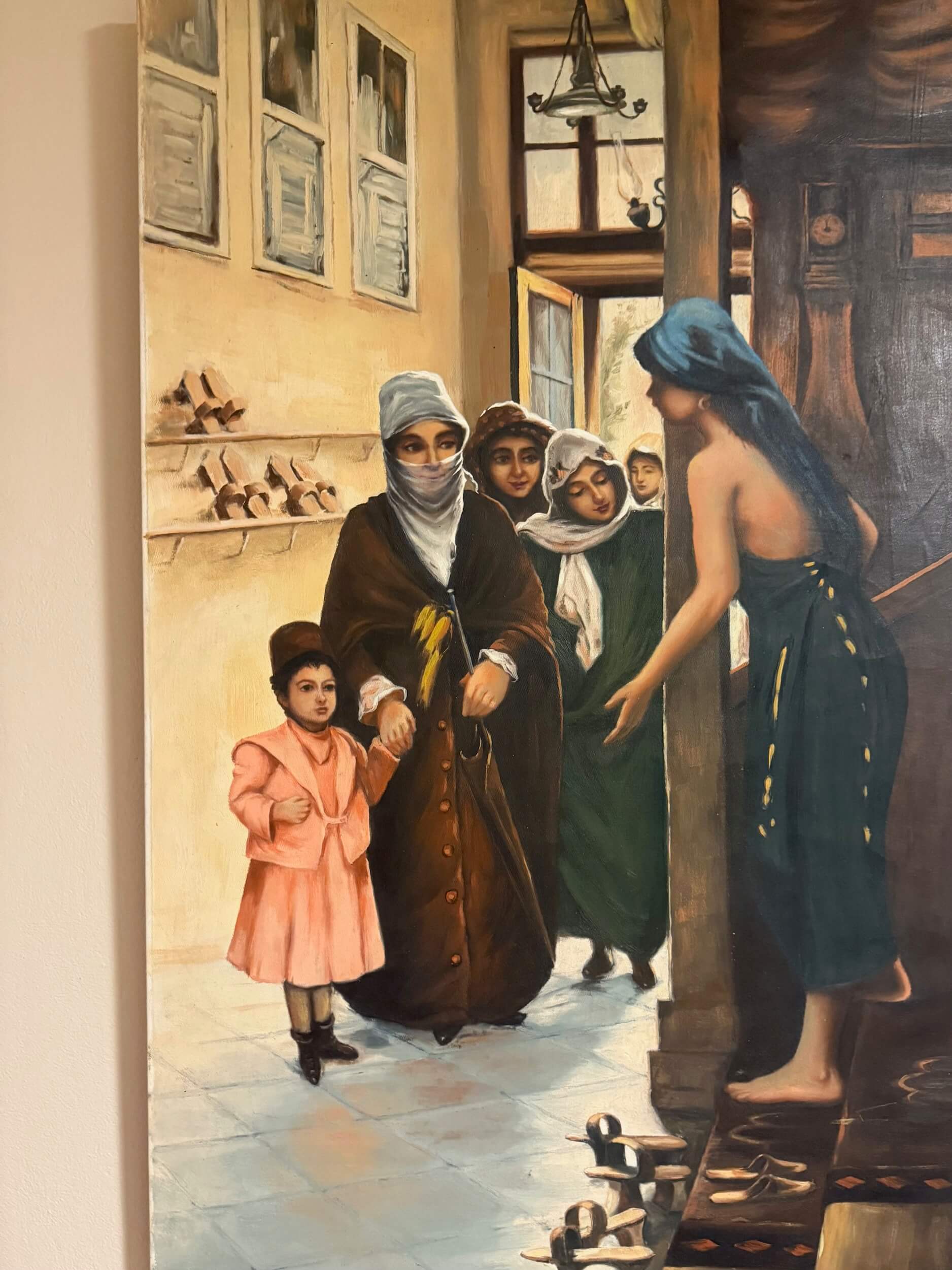
I start with the hamam. The body sweats on the warm marble and the specialized therapist arrives. With a coarse glove, she scrubs the entire body intensely. The water flows abundantly from the marble basins (kurna) and rinses the body using traditional copper bowls. She dips a large cotton sack into water with olive oil soap. Blowing air into the sack, she magically creates a dense, rich, and warm foam, with which she covers the entire body, from head to toe. Inside this cloud of foam, a relaxing massage takes place, followed by the alternation of hot and lukewarm water.
The treatment is completed in the reception area, where Turkish tea is offered with Turkish delights and fruits. "Mamma," I whisper in my mother language and surrender myself to the care of the city for the next few days.
I start with the hamam. The body sweats on the warm marble and the specialized therapist arrives. With a coarse glove, she scrubs the entire body intensely. The water flows abundantly from the marble basins (kurna) and rinses the body using traditional copper bowls. She dips a large cotton sack into water with olive oil soap. Blowing air into the sack, she magically creates a dense, rich, and warm foam, with which she covers the entire body, from head to toe. Inside this cloud of foam, a relaxing massage takes place, followed by the alternation of hot and lukewarm water.
The treatment is completed in the reception area, where Turkish tea is offered with Turkish delights and fruits. "Mamma," I whisper in my mother language and surrender myself to the care of the city for the next few days.
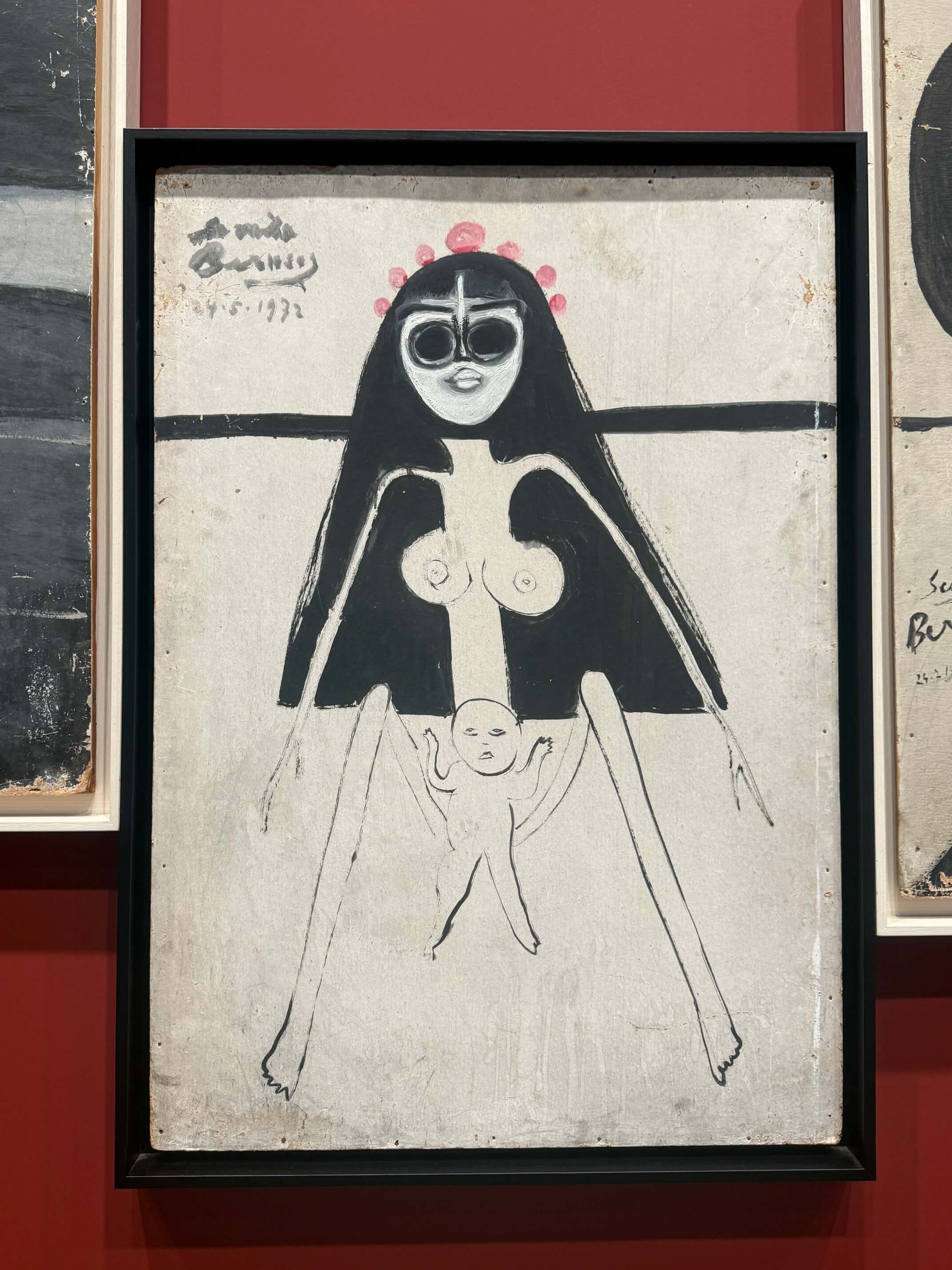
the whole world is inside her body A retrospective exhibition of Semiha Berksoy (1910-2004) at the Istanbul Museum of Modern Art. What luck! The first female opera artist in Turkey and the protagonist of the country's first talking film (Streets of Istanbul). Berksoy developed an impressive artistic path spanning painting, theater, and cinema.
Having lost her mother at a very early age, the female body often becomes a sanctuary where she searches for that missing, primal protection. Berksoy used to say that through painting, she gives birth to herself again; each self-portrait represents a fresh rebirth, a different version of her being coming to light.
Having lost her mother at a very early age, the female body often becomes a sanctuary where she searches for that missing, primal protection. Berksoy used to say that through painting, she gives birth to herself again; each self-portrait represents a fresh rebirth, a different version of her being coming to light.
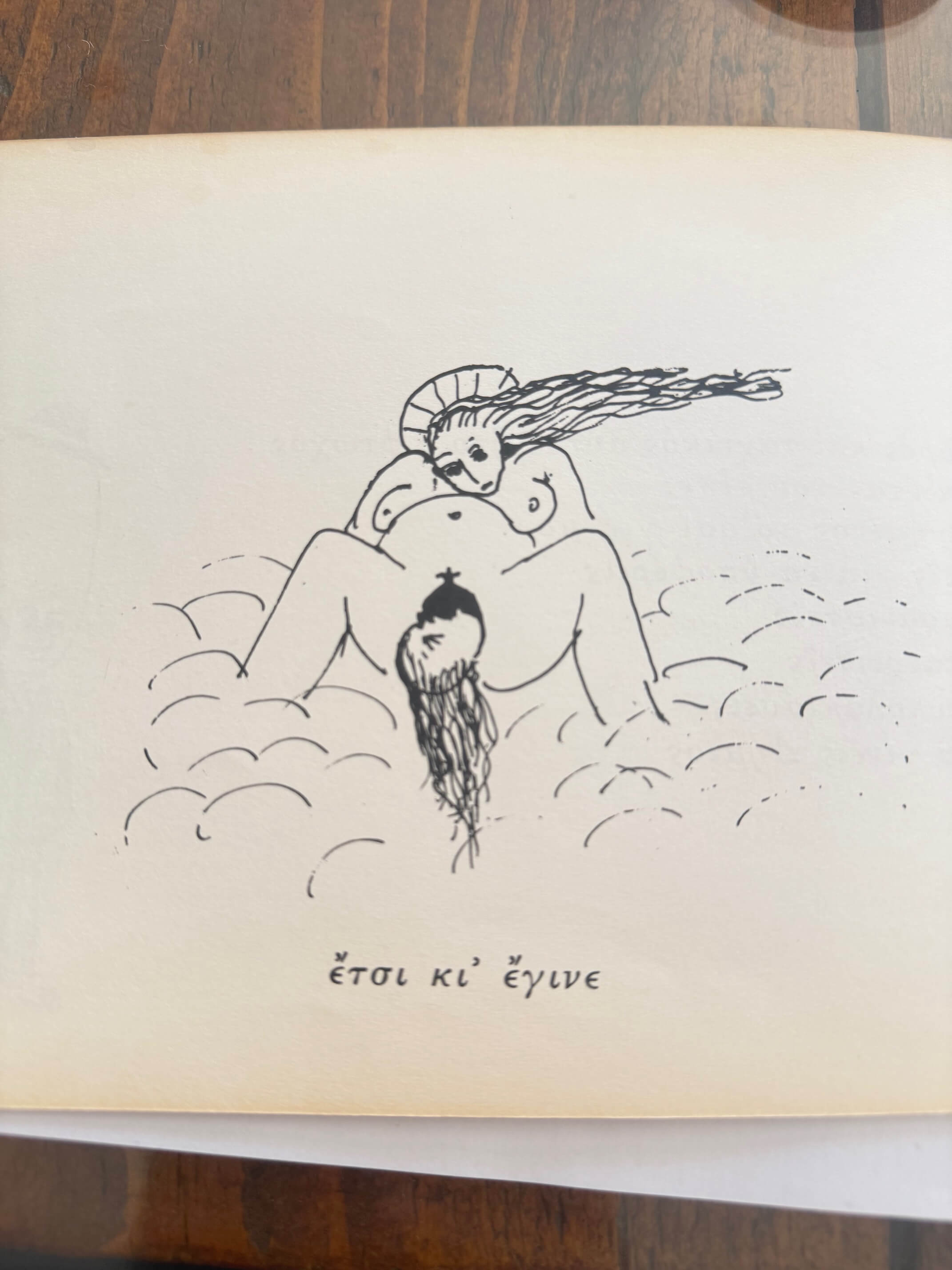
P.S. The Cypriot poet Elena Toumazi, Rebelina, creates her own bodies.
silent letters One day, Hakan Erkinay guided me through the multiple layers of the city. I admired the stories of empires and their anxiety to preserve themselves forever through monuments. And then, a wandering through the local workshops. From the ceramic craftsmen, we found ourselves at Mr. Takis, who in flawless Greek said he is an Ottoman from Rhodes island and revealed to me the hidden knots of carpets.
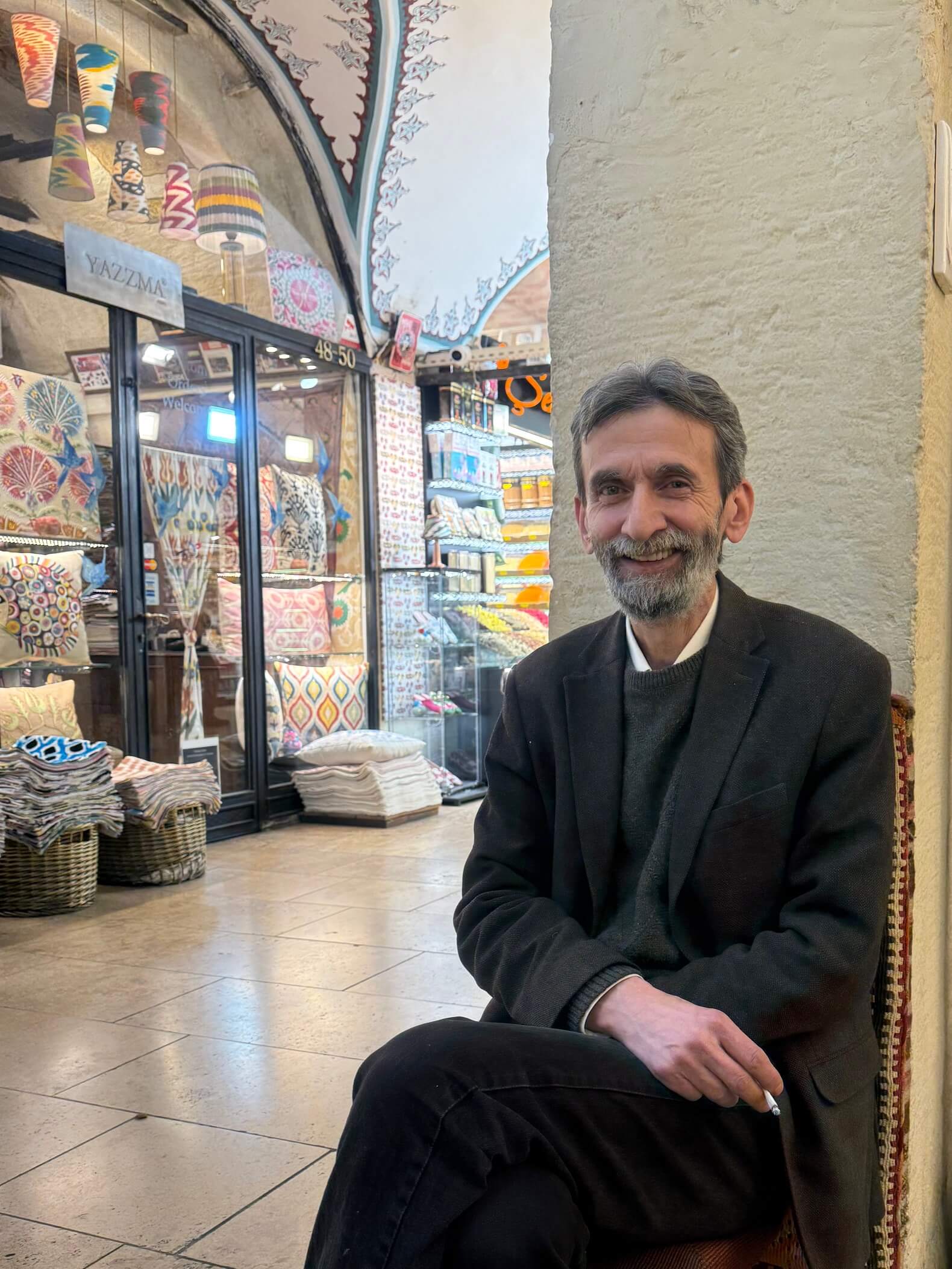
Our route leads us to the Grand Bazaar; right there by the fountain, Recep Karaduman sits outside his shop. Over the course of a single coffee, he speaks to me about the language of the kilim.
Turkish kilims are among the strongest carriers of folk tradition, emotionality, and female practice in the East. They are pure narrative works, full of stories, symbols, and techniques passed down from generation to generation. Each kilim is unique: an observatory of moments and culture, which at the same time reflects social classes and social structure. It is a silent written word.
Our route leads us to the Grand Bazaar; right there by the fountain, Recep Karaduman sits outside his shop. Over the course of a single coffee, he speaks to me about the language of the kilim.
Turkish kilims are among the strongest carriers of folk tradition, emotionality, and female practice in the East. They are pure narrative works, full of stories, symbols, and techniques passed down from generation to generation. Each kilim is unique: an observatory of moments and culture, which at the same time reflects social classes and social structure. It is a silent written word.
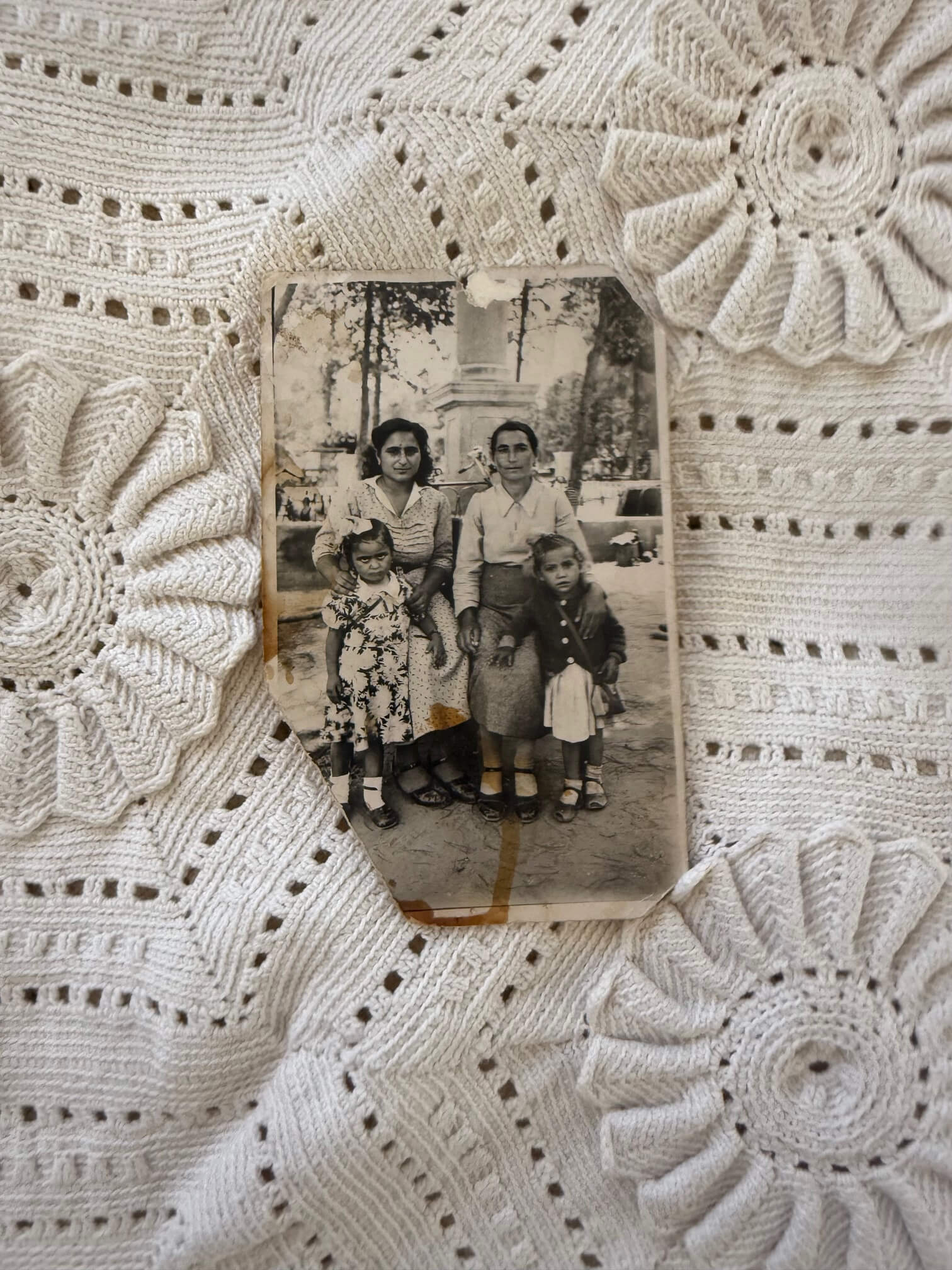
P.S. The quilt bed cover made with a crochet needle and thread by my grandmother Eleni, from the village of Pachna in Cyprus.
portrayals of power Hagia Sophia, besides being a church, functioned as a grand stage for the public image of Byzantium. The emperor appeared as the mediator between heaven and earth, and the mosaics on the walls reinforce this dramaturgy.
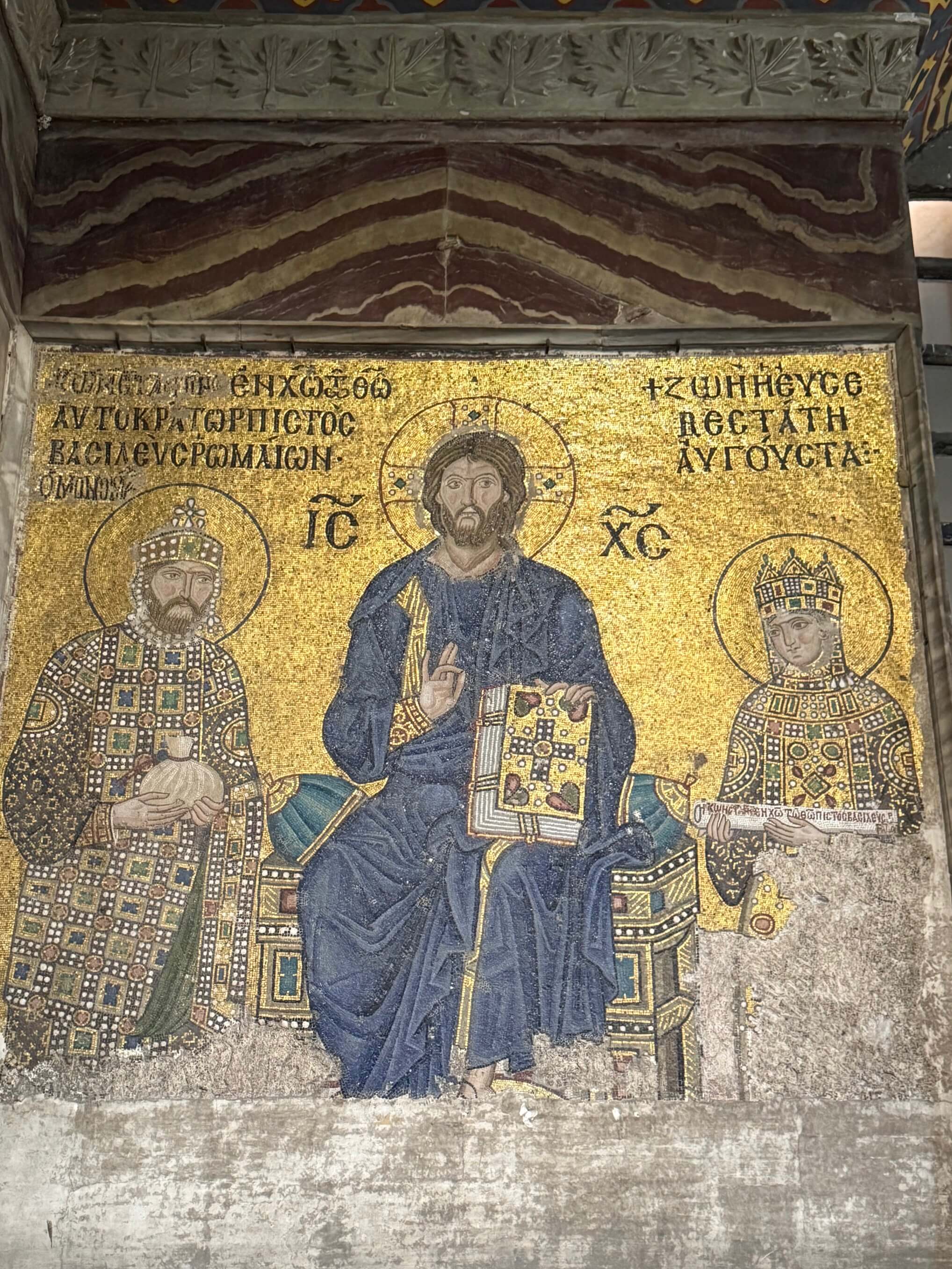
In the famous mosaic of Empress Zoe Porphyrogenita, Christ appears in the center as Pantocrator, and next to him are Zoe and her emperor husband. The representation reminds the faithful who rules, who funds the temple, who has a relationship with the divine, and also who ought to be commemorated.
It is said that the mosaic face of her husband was changed twice, because Zoe married different emperors. The original mosaic depicted Romanos III, then Michael IV, and later Constantine IX—which is the form that survives today. In other words, the artwork itself constituted a form of political update, a public announcement of power.
In the famous mosaic of Empress Zoe Porphyrogenita, Christ appears in the center as Pantocrator, and next to him are Zoe and her emperor husband. The representation reminds the faithful who rules, who funds the temple, who has a relationship with the divine, and also who ought to be commemorated.
It is said that the mosaic face of her husband was changed twice, because Zoe married different emperors. The original mosaic depicted Romanos III, then Michael IV, and later Constantine IX—which is the form that survives today. In other words, the artwork itself constituted a form of political update, a public announcement of power.
how did Medusa end up in the depths of the underground cistern? The Basilica Cistern, the massive underground water reservoir with a capacity of approximately 80,000 cubic meters, was constructed in the 6th century ad by Emperor Justinian I and supplied the imperial palace and other buildings of the Byzantine capital.
The forest of 336 columns is still preserved beneath the city. Although they are all 9 meters high, they differ from one another (Corinthian, Doric, and Ionic orders), as the entire project was built using materials from older structures of the Roman period.
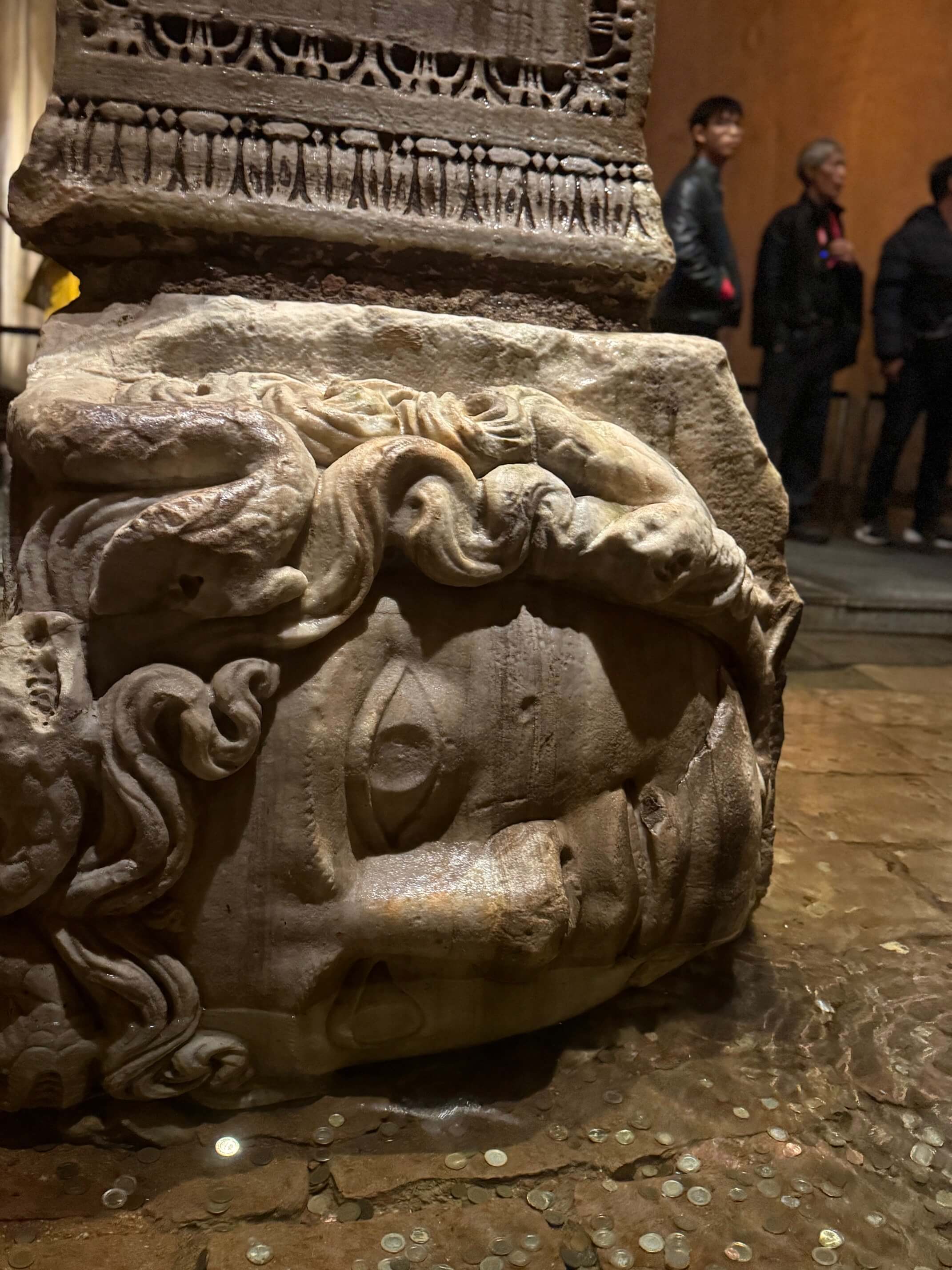
Carved heads of Medusa, placed one on its side and the other upside down, were used as the bases for two columns. This structural necessity rested upon two faces of a mythical figure that belonged to a previous world—before the Christian and Ottoman city—yet it gives the feeling that even today, if she wishes, she can turn you to stone.
The forest of 336 columns is still preserved beneath the city. Although they are all 9 meters high, they differ from one another (Corinthian, Doric, and Ionic orders), as the entire project was built using materials from older structures of the Roman period.
Carved heads of Medusa, placed one on its side and the other upside down, were used as the bases for two columns. This structural necessity rested upon two faces of a mythical figure that belonged to a previous world—before the Christian and Ottoman city—yet it gives the feeling that even today, if she wishes, she can turn you to stone.
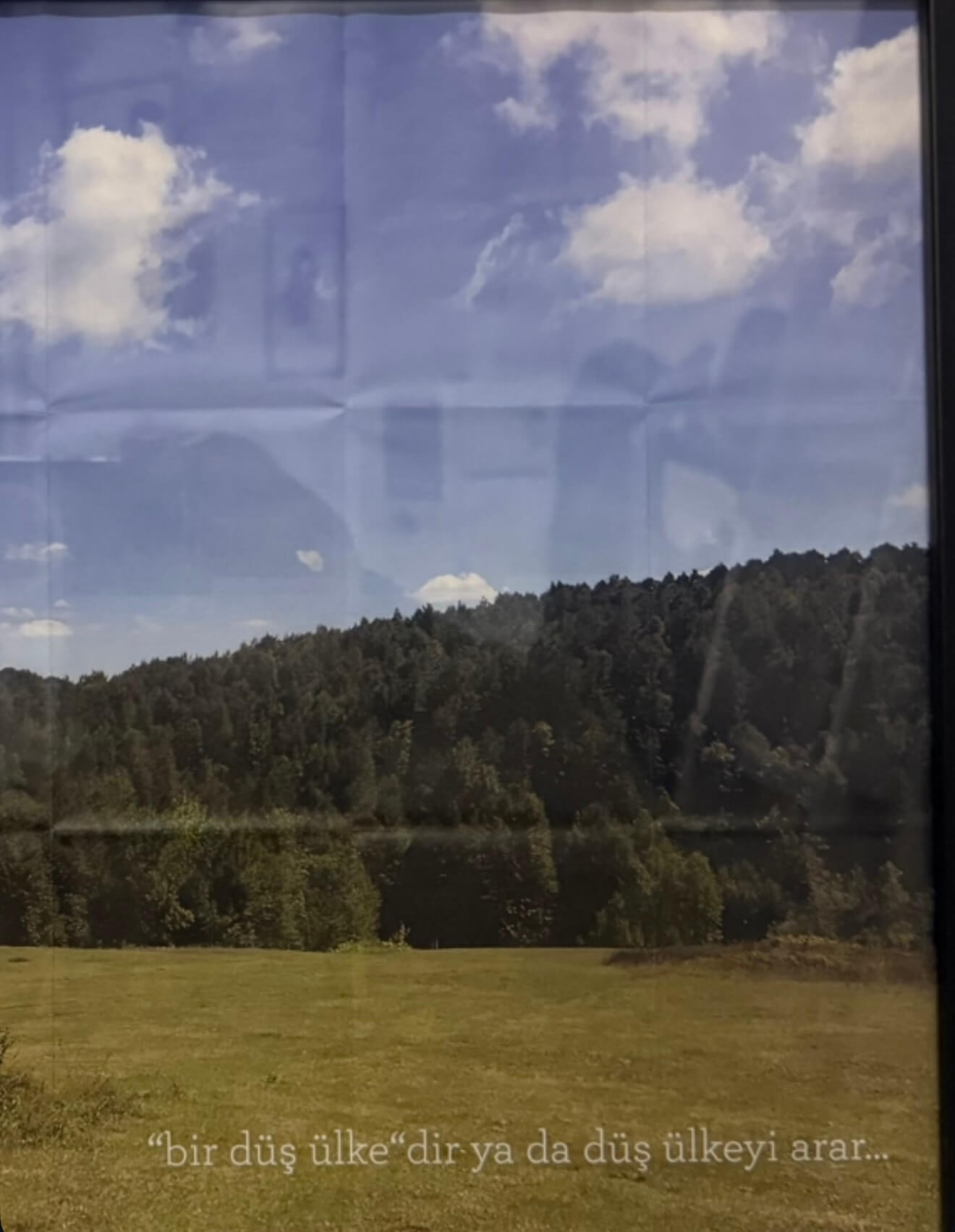
we meet in the age of dreams After a conversation with the women’s collective of Çıplak Ayaklar Kumpanyası—an independent contemporary dance and performing arts group with a deeply socio-political character—I was putting on my shoes when an image caught my eye. “The very landscape they were just discussing, the exact place they dream of visiting,” I thought. Looking back at the photograph now, I notice a few words and attempt to translate them: “...is a dreamland' or 'in search of a dream world..."
Serdar Darendeliler and Refik Akyüz from the platform Platform by GAPO, an initiative with a long history centered around contemporary photography, also welcomed me warmly to their space. I met Merve Kavas from the organization Yekpare, which focuses on community empowerment through tools and programs for social enterprises. And Ezel Yılmaz invites me to Depo—a former tobacco warehouse operating as a non-commercial center for arts and civil society—and I learn more about the organization Anadolu Kültür, the creators and coordinators of the VAHA program.
I don't know how, but I found myself in a gallery watching the story of an ant and a boy on a screen. Then I hear Eda telling me: "Let's go!" Eda Önsel, the soul of Saye Kolektif, an independent and interdisciplinary artistic core operating as a platform for research, creation, and residency. Near Taksim Square, we talk incessantly and make dreams for the summer, the sea, for our children, and our art. There, in her Istanbul, our time together embraced me that day, of February 12th, and sent me safely back to my home, in Limassol.
Serdar Darendeliler and Refik Akyüz from the platform Platform by GAPO, an initiative with a long history centered around contemporary photography, also welcomed me warmly to their space. I met Merve Kavas from the organization Yekpare, which focuses on community empowerment through tools and programs for social enterprises. And Ezel Yılmaz invites me to Depo—a former tobacco warehouse operating as a non-commercial center for arts and civil society—and I learn more about the organization Anadolu Kültür, the creators and coordinators of the VAHA program.
I don't know how, but I found myself in a gallery watching the story of an ant and a boy on a screen. Then I hear Eda telling me: "Let's go!" Eda Önsel, the soul of Saye Kolektif, an independent and interdisciplinary artistic core operating as a platform for research, creation, and residency. Near Taksim Square, we talk incessantly and make dreams for the summer, the sea, for our children, and our art. There, in her Istanbul, our time together embraced me that day, of February 12th, and sent me safely back to my home, in Limassol.
Share:

 Share:
Share:
