


Community
Learning & mobility

Amed Or Boundless Imagination
17.08.2026
With the support of VAHA Learning and Mobility Grant, Sofia Zafeiriou from Khora Community Center visited Diyarbakır, Türkiye. Let's hear her reflections on the journey from her directly:
Two Rivers
Meeting with an old friend from Mordem. Two parallel rainbows appear while we talk. He says their two edges come not from pots of gold but from the two rivers, they signify where we are; Mesopotamia. He helps me map the water flows of the area in a way he knows best, looking back into his family roots, ancient legends and trusted people he works with; all intertwined and grounded in where we are. The map starts to form through relations rather than places. He wants to connect me with as many people as possible, with admirable courage as I get that he doesn't fully understand what I aim to do. A lot of people pass by and meet me while we talk, I offer them mastiha drops which have melted from the sun and mess with our teeth and the backyard opens up to a multiplicity of local radio shows, wild greens, rhythm music sheets, people who work with their body or land or food or all of the above. In this landscape, I quickly become the close Other, while on the edges of our encounter, there is an echo of how the city transitions around the edges as well. It is my first day back, reconnecting and returning.
Opacity
First day into Sur. The smell of fresh bread and simit in the narrow streets into my face tingle the familiar; I try not to romanticise, but my childhood is filled with this smell and I miss it. For decades now all bread in Greece, even in my hometown is soulless and industrialised. I notice the massive parking lot and the enclaved yapıs. This is my first sighting of the new borderland, which appears to be constructed with void space and trapezoid metal sheets. I try to find out later what the sheets cover, nobody seems to remember exactly which monument is being “protected” or “reconstructed”; the process seems to be taking forever and Surp Sargis is now a fort of forgetfulness. Hours later and into the deep night I gaze from a rooftop at the same area and beyond, where the white exterior walls contrast with the old black basalt, signifying not only the new, but also the one born from outside.
In the same neighbourhood, I revisit Palimpsest association’s exhibition at Cemil Paşa museum “In the footsteps of Tigris”, mainly to meet Dilan Kaya whom I first met in Athens earlier in the year. Dilan is an urban planner whose work and dedication were both inspiring and pragmatically grounding for my trip and research. Through their lens, I get to understand Tigris basins as assets and inbounds, through oral stories side by side with hydrological maps as borderscapes. As I nip into the works through the translucent organza which flows like Dicle across the room, I am wondering what kind of courage and creativity it takes to play with opacity like that, as well as to bring the small and the big stories in the same room together. I spend the rest of my days frantically reading an architecture master’s thesis on Sur in Greek, as well as William Dalrymple’s travel book about his journey in the area in the late 90s, recreating the journey of a 6th-century monk, in between places and meetings.
Common ground
There is heavy rain and I visit an agro-ecology school, part of the Amed Ecology Association, now supported by the municipality. It’s a lived experiment of a future in which everyone has access to food and shared land, even right next to a big city, which resonates heavily with me. We discuss foraging, seeds and sound and make exciting plans, which never materialise as the rain persists for the rest of the month. I also go to two of the places I will keep returning to, both on the shores of Dicle, Ongözlü bridge and Hevsel gardens.
Part of the same constellation of ecology groups, Amed kadin bisiklet grubu is a local women’s bicycle collective, whose organising gives me a sense of something that is missing where I live and work. As I lean more into the interwoven women’s networks of the city the next few weeks, I wonder what feminist questions I can take back home and how. I try to formulate an idea in practice, in which sound and listening can open up to the possibility of sharing what it is that we lack.
I keep returning to Hevsel and Ongözlü, each time with different women, activists, cultural workers and artists. It is clear that both topographies have survived repeated processes of monumentalisation and heritage-making without ever becoming only monuments. I start to understand them less as sites to make field recordings and more as grounds where Amed’s memory accumulates. From women’s labour to the palimpsest of Kırklar, from water scarcity and the hydropolitics of irrigation to everyday survival, from celebration and wishes to how we can find voice in water bodies and more-than-human bodies.
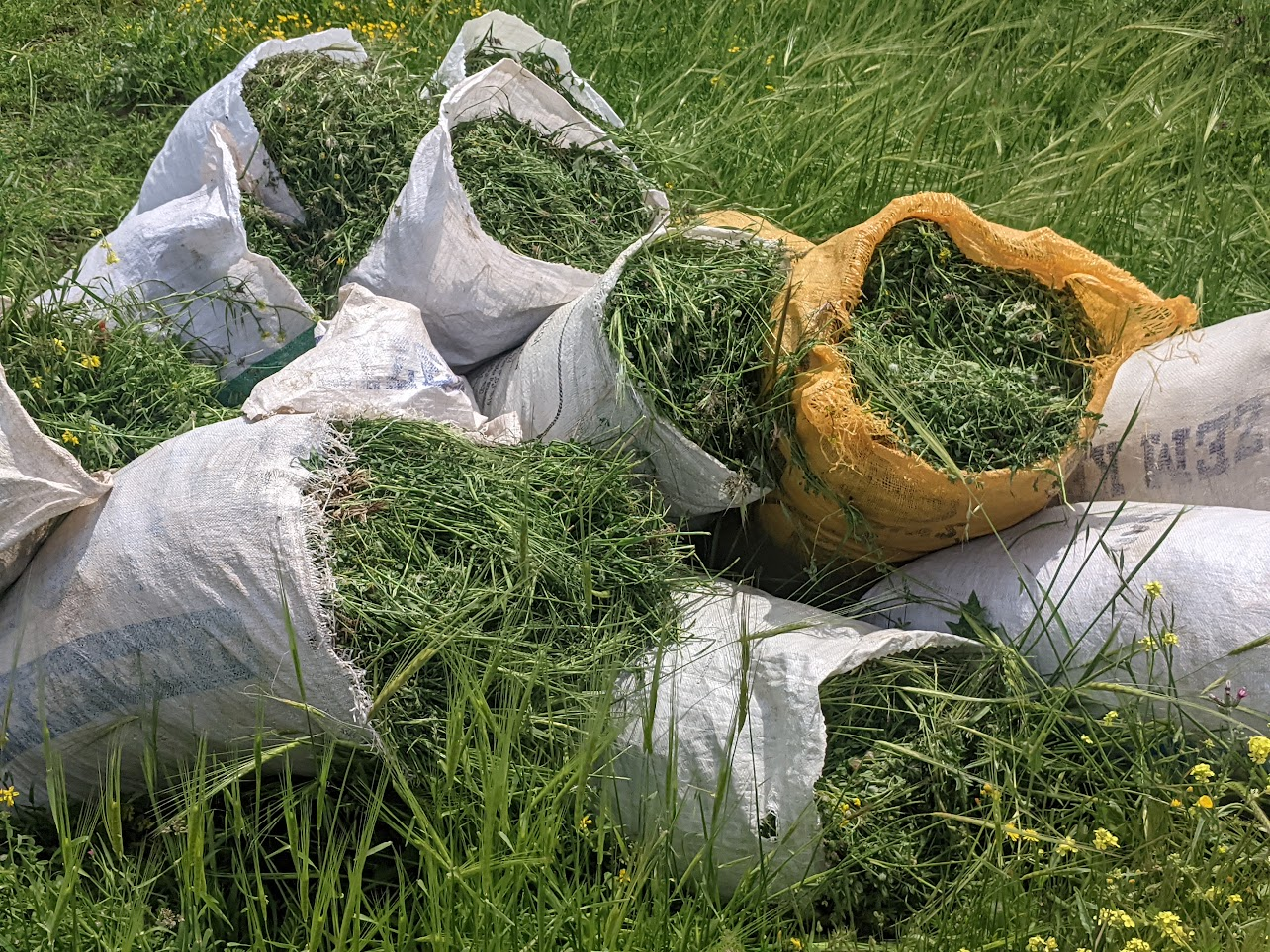
Meeting with an old friend from Mordem. Two parallel rainbows appear while we talk. He says their two edges come not from pots of gold but from the two rivers, they signify where we are; Mesopotamia. He helps me map the water flows of the area in a way he knows best, looking back into his family roots, ancient legends and trusted people he works with; all intertwined and grounded in where we are. The map starts to form through relations rather than places. He wants to connect me with as many people as possible, with admirable courage as I get that he doesn't fully understand what I aim to do. A lot of people pass by and meet me while we talk, I offer them mastiha drops which have melted from the sun and mess with our teeth and the backyard opens up to a multiplicity of local radio shows, wild greens, rhythm music sheets, people who work with their body or land or food or all of the above. In this landscape, I quickly become the close Other, while on the edges of our encounter, there is an echo of how the city transitions around the edges as well. It is my first day back, reconnecting and returning.
Opacity
First day into Sur. The smell of fresh bread and simit in the narrow streets into my face tingle the familiar; I try not to romanticise, but my childhood is filled with this smell and I miss it. For decades now all bread in Greece, even in my hometown is soulless and industrialised. I notice the massive parking lot and the enclaved yapıs. This is my first sighting of the new borderland, which appears to be constructed with void space and trapezoid metal sheets. I try to find out later what the sheets cover, nobody seems to remember exactly which monument is being “protected” or “reconstructed”; the process seems to be taking forever and Surp Sargis is now a fort of forgetfulness. Hours later and into the deep night I gaze from a rooftop at the same area and beyond, where the white exterior walls contrast with the old black basalt, signifying not only the new, but also the one born from outside.
In the same neighbourhood, I revisit Palimpsest association’s exhibition at Cemil Paşa museum “In the footsteps of Tigris”, mainly to meet Dilan Kaya whom I first met in Athens earlier in the year. Dilan is an urban planner whose work and dedication were both inspiring and pragmatically grounding for my trip and research. Through their lens, I get to understand Tigris basins as assets and inbounds, through oral stories side by side with hydrological maps as borderscapes. As I nip into the works through the translucent organza which flows like Dicle across the room, I am wondering what kind of courage and creativity it takes to play with opacity like that, as well as to bring the small and the big stories in the same room together. I spend the rest of my days frantically reading an architecture master’s thesis on Sur in Greek, as well as William Dalrymple’s travel book about his journey in the area in the late 90s, recreating the journey of a 6th-century monk, in between places and meetings.
Common ground
There is heavy rain and I visit an agro-ecology school, part of the Amed Ecology Association, now supported by the municipality. It’s a lived experiment of a future in which everyone has access to food and shared land, even right next to a big city, which resonates heavily with me. We discuss foraging, seeds and sound and make exciting plans, which never materialise as the rain persists for the rest of the month. I also go to two of the places I will keep returning to, both on the shores of Dicle, Ongözlü bridge and Hevsel gardens.
Part of the same constellation of ecology groups, Amed kadin bisiklet grubu is a local women’s bicycle collective, whose organising gives me a sense of something that is missing where I live and work. As I lean more into the interwoven women’s networks of the city the next few weeks, I wonder what feminist questions I can take back home and how. I try to formulate an idea in practice, in which sound and listening can open up to the possibility of sharing what it is that we lack.
I keep returning to Hevsel and Ongözlü, each time with different women, activists, cultural workers and artists. It is clear that both topographies have survived repeated processes of monumentalisation and heritage-making without ever becoming only monuments. I start to understand them less as sites to make field recordings and more as grounds where Amed’s memory accumulates. From women’s labour to the palimpsest of Kırklar, from water scarcity and the hydropolitics of irrigation to everyday survival, from celebration and wishes to how we can find voice in water bodies and more-than-human bodies.
An aural borderland
On Good Friday I try to find a church service, out of historical curiosity. Map-making in Sur is an entangled condition, but little do I know that I will end up moving from the touristic high street to the silence of my own footsteps around Surp Giragos and the old Christian mahala, now turned into a brand “New Sur”. I can feel the bottom of my feet becoming ears and later I recount these steps to make a recording, somehow feeling that this carries a bigger story than the one I can tell.
I also revisit the rooftop in the early morning and capture the morning sounds of the birds. This time my gaze goes towards Kırklar and I keep hearing Sarı Gelin in my head, which helps me grasp how close and far away I come from at the same time. On my last day, I take a wandering walk through Sur with a local young woman who experiences misophonia and is interested in hearing the place through the differently controlled listening of my recorder. Again here field recording becomes less about capturing the soundscape and more about negotiating distance from it. Her way of listening unsettles my own assumptions about what it means to listen closely, or what sounds familiar, reminding me once again that the city doesn’t sound the same to every listening body.
On Good Friday I try to find a church service, out of historical curiosity. Map-making in Sur is an entangled condition, but little do I know that I will end up moving from the touristic high street to the silence of my own footsteps around Surp Giragos and the old Christian mahala, now turned into a brand “New Sur”. I can feel the bottom of my feet becoming ears and later I recount these steps to make a recording, somehow feeling that this carries a bigger story than the one I can tell.
I also revisit the rooftop in the early morning and capture the morning sounds of the birds. This time my gaze goes towards Kırklar and I keep hearing Sarı Gelin in my head, which helps me grasp how close and far away I come from at the same time. On my last day, I take a wandering walk through Sur with a local young woman who experiences misophonia and is interested in hearing the place through the differently controlled listening of my recorder. Again here field recording becomes less about capturing the soundscape and more about negotiating distance from it. Her way of listening unsettles my own assumptions about what it means to listen closely, or what sounds familiar, reminding me once again that the city doesn’t sound the same to every listening body.
Before and after the dams
A few of the journeys outside Diyarbakir bring me closer to the river through a more deliberate practice of recording. I go with friends to a nearby village; we record the streams and share stories amidst pouring rain, as we find refuge inside the caves on the side of a hill. I learn how to identify different cave structures and topologies. These are also some of the only moments in the trip when I unpack almost everything I have with me –a stereo pair, hydrophone, geophone– and record with a different kind of intention and care, listening through air, water and ground.
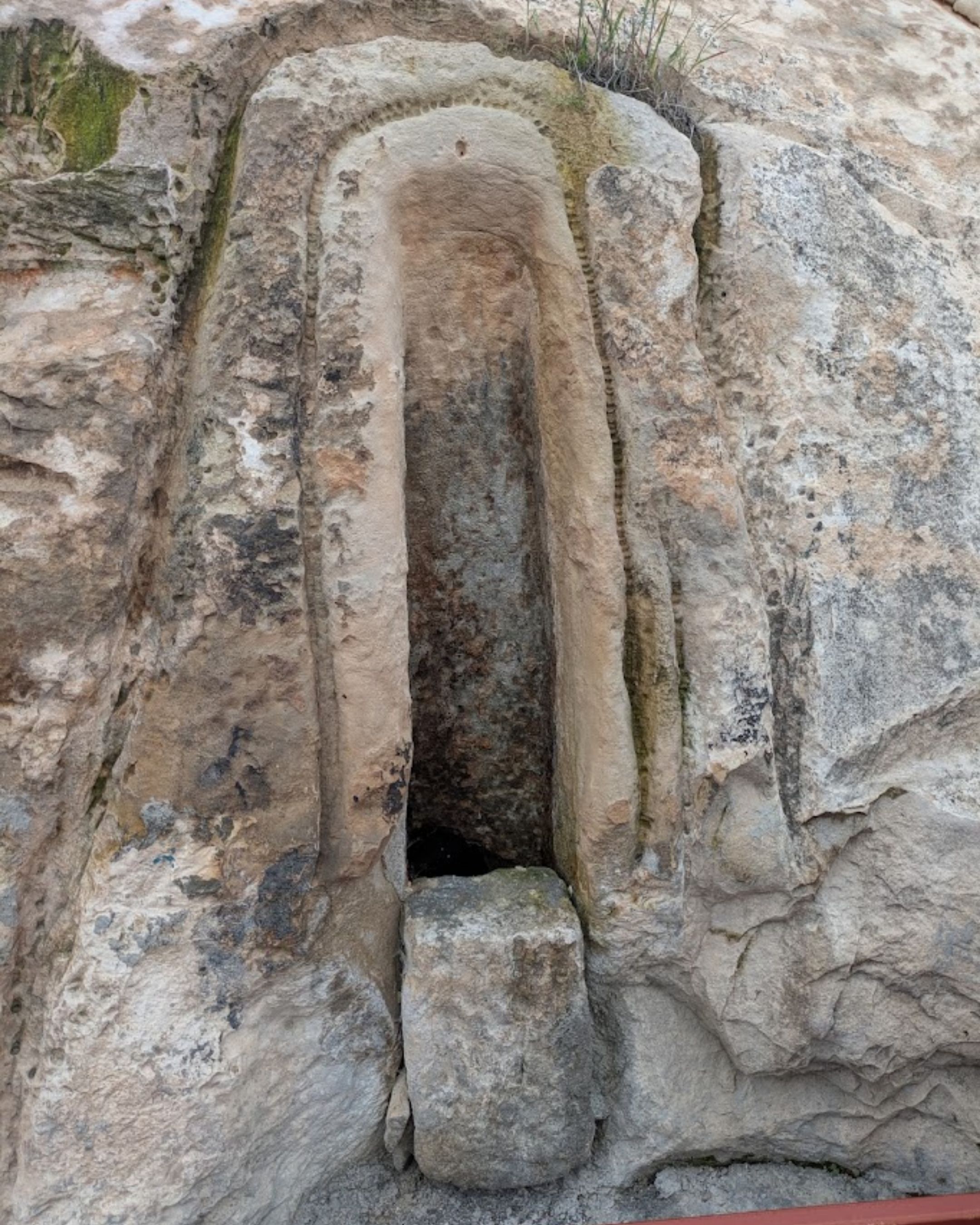
Later, on the way to Batman and Hasankeyf, another companion tells me about his years there as a teacher, and our conversation drifts between collective memory, dream analysis and water as energy. By the time I reach the Euphrates and Halfeti, further downstream, water has taken on another scale entirely. I record around the submerged villages, in between the tourist boat arrivals, and again beyond the dam, trying less to document what has disappeared than to listen to what these altered waters now hold.
There’s something almost anti-documentary about these field trips: landscapes allowed to dominate what is to be said and very little need to explain why any of it matters. Listening here reveals something tender and slightly absurd in all this making our way through rain, stone and ghost places, all of which keep rearranging what I thought I had come there to find.
A few of the journeys outside Diyarbakir bring me closer to the river through a more deliberate practice of recording. I go with friends to a nearby village; we record the streams and share stories amidst pouring rain, as we find refuge inside the caves on the side of a hill. I learn how to identify different cave structures and topologies. These are also some of the only moments in the trip when I unpack almost everything I have with me –a stereo pair, hydrophone, geophone– and record with a different kind of intention and care, listening through air, water and ground.
Later, on the way to Batman and Hasankeyf, another companion tells me about his years there as a teacher, and our conversation drifts between collective memory, dream analysis and water as energy. By the time I reach the Euphrates and Halfeti, further downstream, water has taken on another scale entirely. I record around the submerged villages, in between the tourist boat arrivals, and again beyond the dam, trying less to document what has disappeared than to listen to what these altered waters now hold.
There’s something almost anti-documentary about these field trips: landscapes allowed to dominate what is to be said and very little need to explain why any of it matters. Listening here reveals something tender and slightly absurd in all this making our way through rain, stone and ghost places, all of which keep rearranging what I thought I had come there to find.
Departures
Before leaving Amed, I fill my bag with books in Kurdish and Turkish, bought and donated from friends for Echo Mobile Library, which travels with a van between refugee camps around Athens. My last night in the city is spent at the International Amed Theatre Festival, seeing many of the people I had met over the previous weeks all gathered in one festive place. After the program finishes, part of the remaining audience gifts the zurna-davul duo and we dance. Time and space stretch a little further through these small negotiations and I leave full. The following day, I arrive at the bus station in Urfa. I find myself amidst an overwhelming cheering crowd. Unable to move, it takes me a few scattered minutes to realise that I am unexpectedly unwelcomed by a nationalist send-off for young men leaving for military service. Flags, chanting, zurna again. Another kind of departure.
Sofia Zafeiriou is a founding member of Khora association and a composer with a multidisciplinary background in computer music, sound art, and participatory technologies. She travelled through Southeast Turkey in April 2026 as part of VAHA Learning & Mobility, developing ongoing research around water, memory, feminist organising and situated listening.
Before leaving Amed, I fill my bag with books in Kurdish and Turkish, bought and donated from friends for Echo Mobile Library, which travels with a van between refugee camps around Athens. My last night in the city is spent at the International Amed Theatre Festival, seeing many of the people I had met over the previous weeks all gathered in one festive place. After the program finishes, part of the remaining audience gifts the zurna-davul duo and we dance. Time and space stretch a little further through these small negotiations and I leave full. The following day, I arrive at the bus station in Urfa. I find myself amidst an overwhelming cheering crowd. Unable to move, it takes me a few scattered minutes to realise that I am unexpectedly unwelcomed by a nationalist send-off for young men leaving for military service. Flags, chanting, zurna again. Another kind of departure.
Sofia Zafeiriou is a founding member of Khora association and a composer with a multidisciplinary background in computer music, sound art, and participatory technologies. She travelled through Southeast Turkey in April 2026 as part of VAHA Learning & Mobility, developing ongoing research around water, memory, feminist organising and situated listening.
Share:

 Share:
Share:
