


Community
Learning & mobility
As mentioned earlier, after many consecutive years of visiting, this was our first time back in more than a decade. The main reason for the trip was the opening weekend of the Circulation(s) festival, a platform that had already been on our radar and that we had also applied to together with our affiliated photographers. The festival takes place at Centquatre-Paris, a large cultural venue in a former railway maintenance depot. Now in its 16th edition, Circulation(s) presents works by 26 artists from 15 different nationalities, without a fixed theme, focusing instead on emerging European photography. What stood out most was the installation approach: photography extended into space through objects and materials, treating the medium as spatial rather than purely image-based. The use of large former industrial spaces for cultural programming also felt significant—creating a direct connection with local audiences and offering a model that is still unevenly implemented in Turkey, despite a few strong examples.
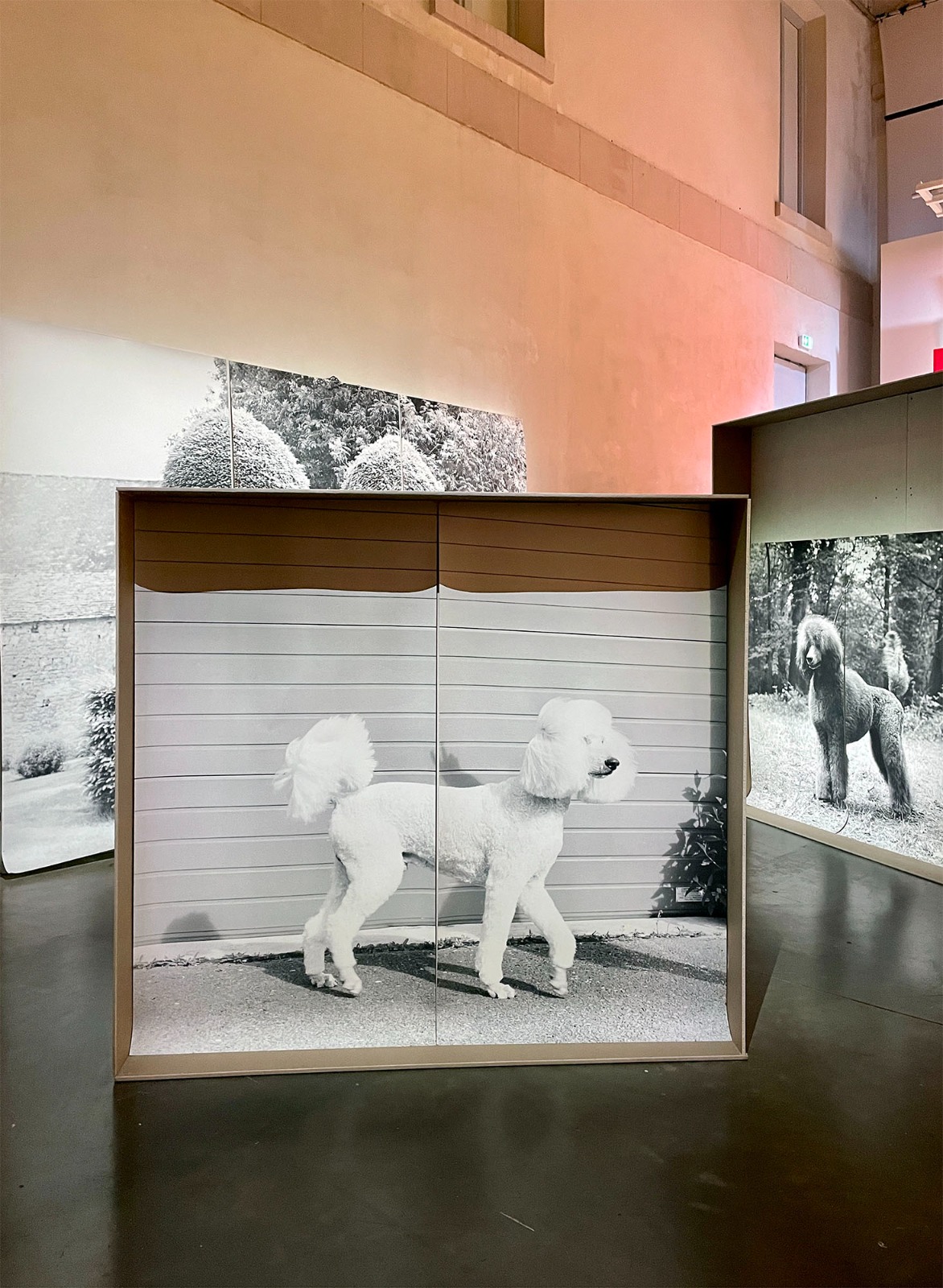 A view from T. Muller's "Feuillages rebelles, pelages revêches" at Circulation(s).
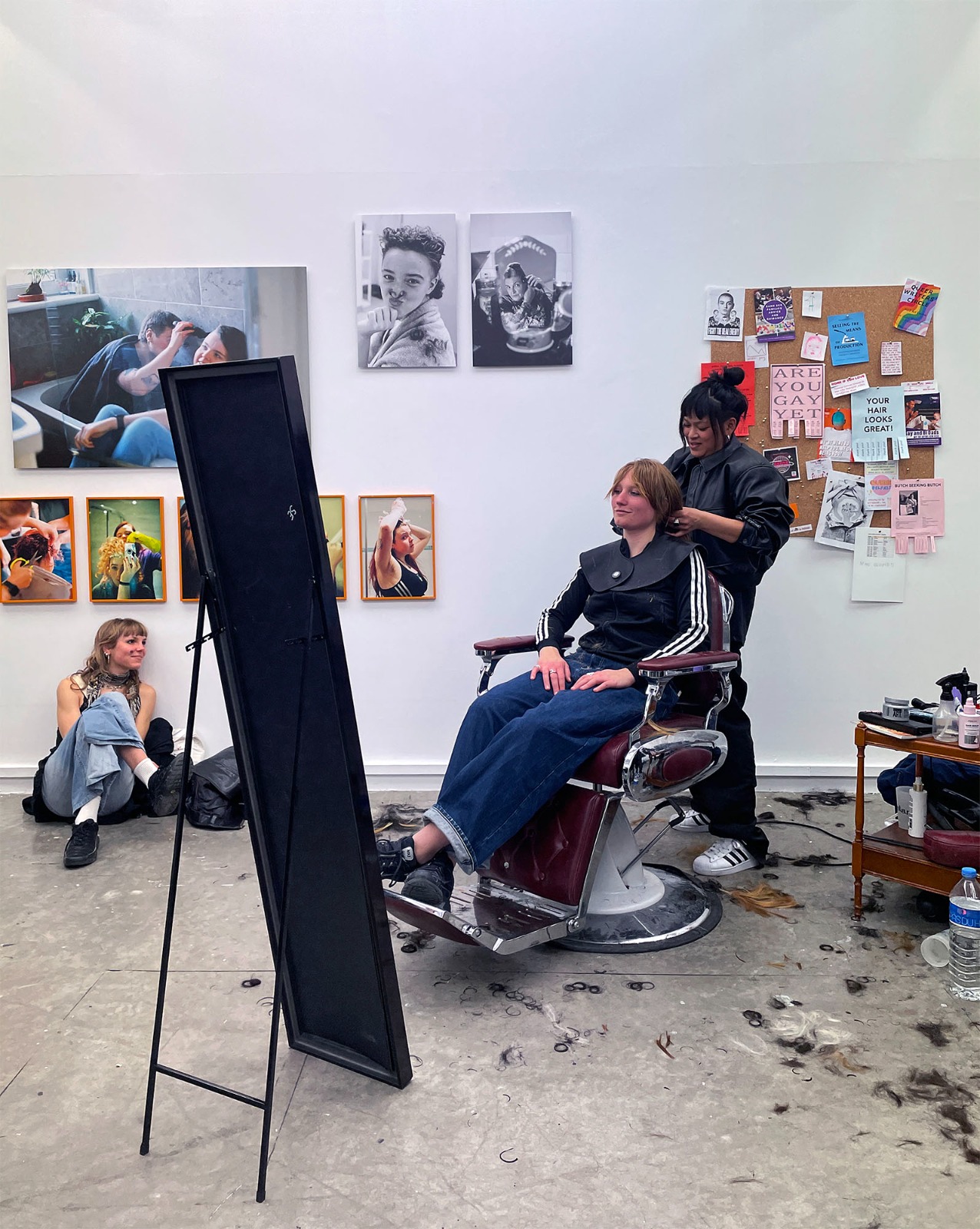 A performance inside Ellen Blair's "Homemade Undercuts" at Circulation(s).
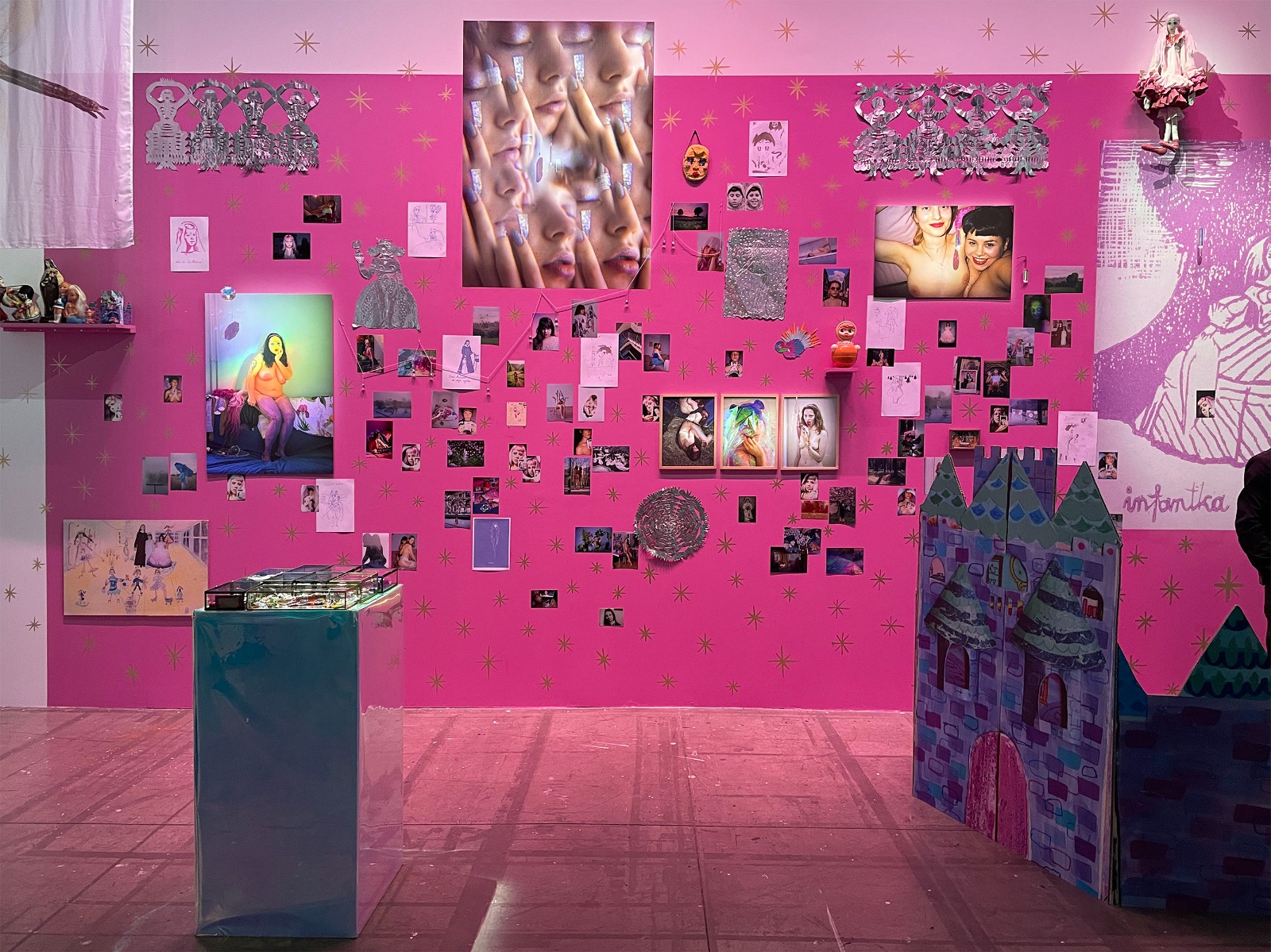 A view from Joanna Szproch's "Alltagsfantasie" at Circulation(s).
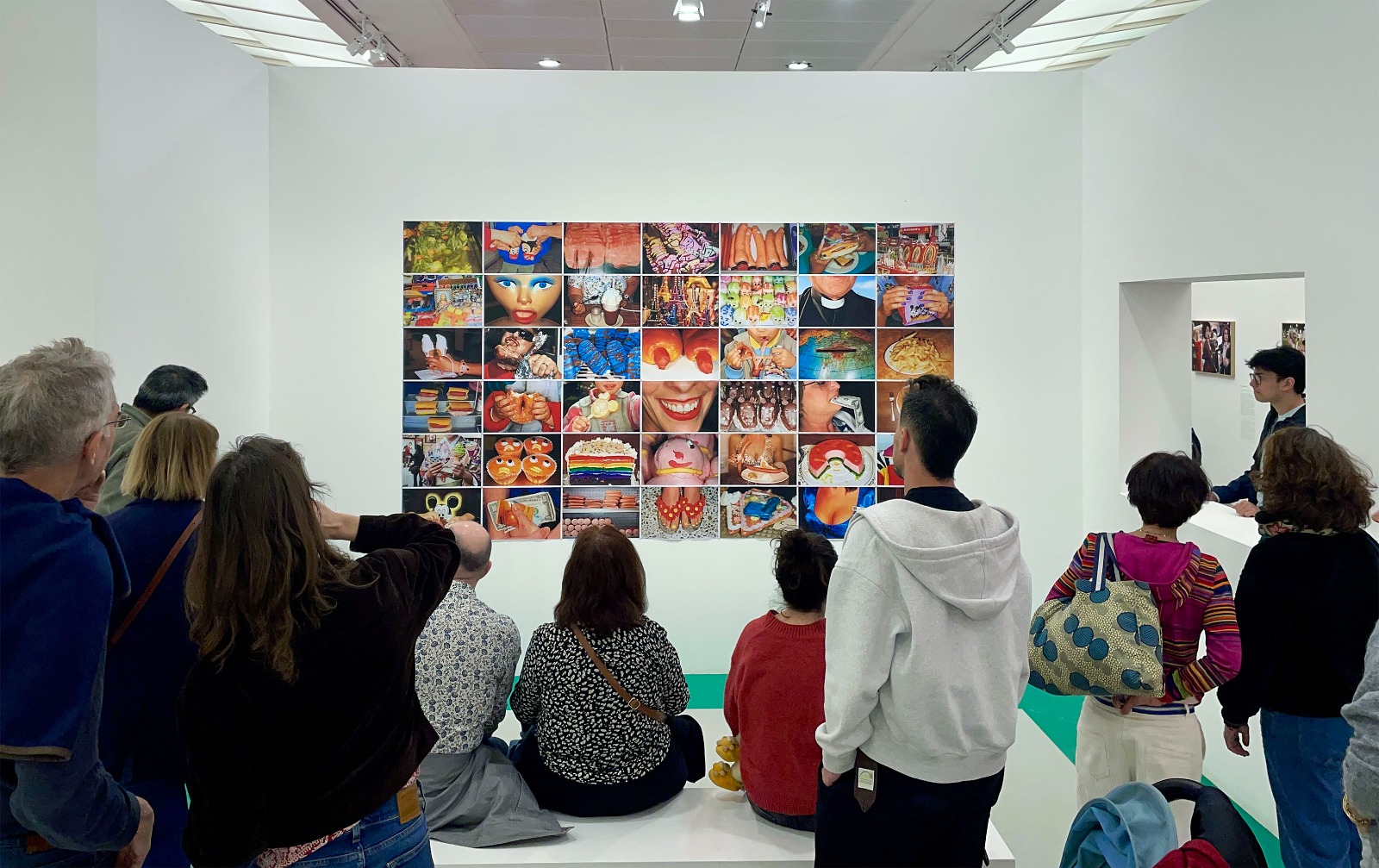 A view from Martin Parr's "Global Warning" exhibition at Jeu de Paume-far too crowded.
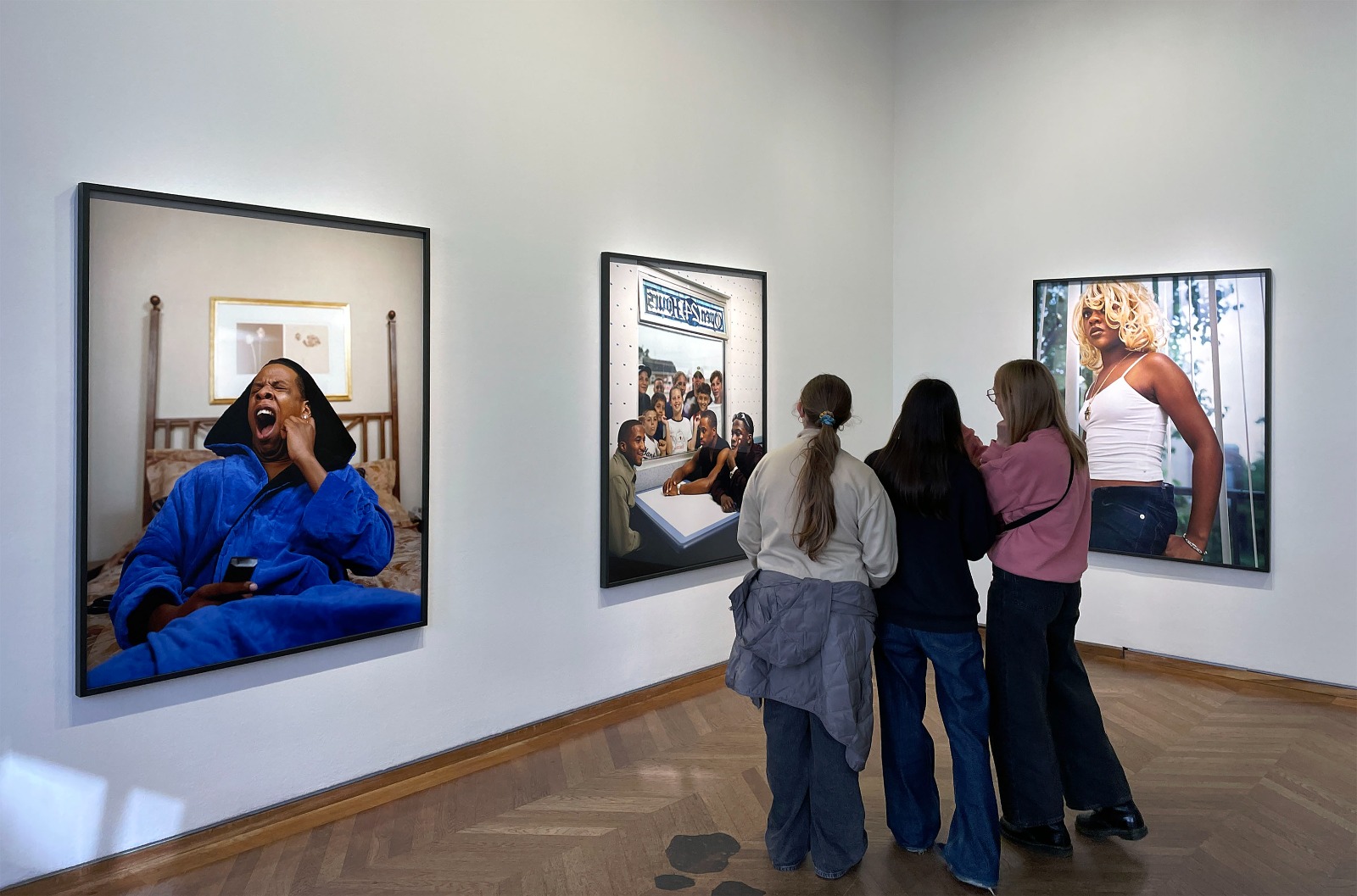 A view from Dana Lixenberg's "American Images" at la MEP.
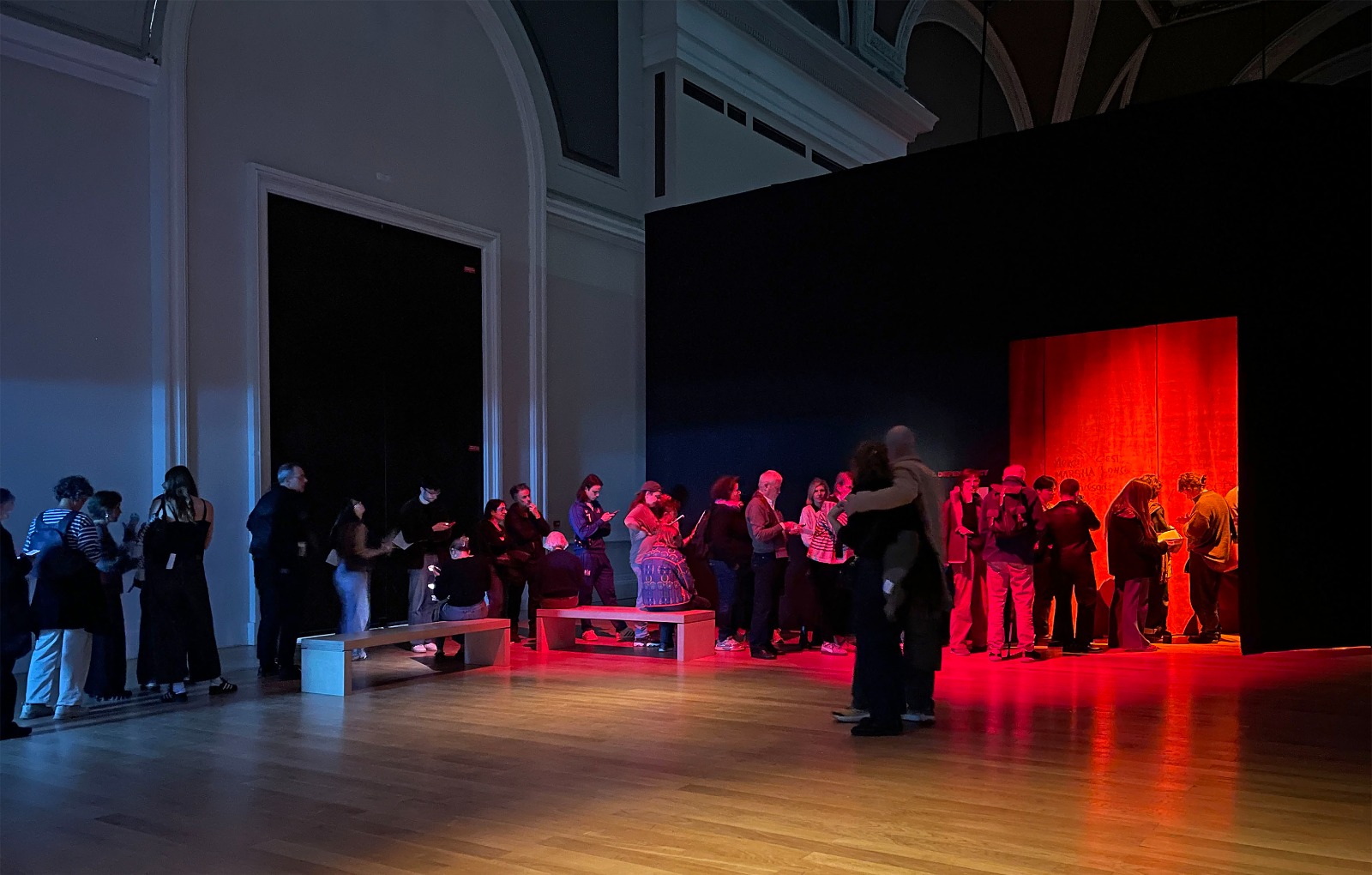 Visitors waiting in queues to enter the viewing booths of Nan Goldin's "This Will Not End Well" at the Grand Palais.
Next Time (Hopefully Not) in 22 Years - Part 2
Notes from Paris
12.05.2026
Between 16–23 March 2026, Serdar Darendeliler and Refik Akyüz travelled to Amsterdam and Rotterdam as part of the VAHA Learning and Mobility Grant. Following the highlights from Amsterdam and Rotterdam in the Part 1, we continue reading about their encounters in Paris, in Serdar's own words.
Coming Home Again
Paris is a city we’ve always felt at home in. It also has a strong and organic relationship with photography—hardly surprising, given the medium’s historical roots in France—with a dense network of institutions, agencies, festivals, publications, collectives, and fairs shaping its scene. We arrived to an unexpectedly generous spring atmosphere, after being more used to its greyer skies in late autumn. Fruit trees were in bloom, everything had turned green, and people were already gathering outdoors to catch the first real sun. Paris greeted us in its softest possible mood.As mentioned earlier, after many consecutive years of visiting, this was our first time back in more than a decade. The main reason for the trip was the opening weekend of the Circulation(s) festival, a platform that had already been on our radar and that we had also applied to together with our affiliated photographers. The festival takes place at Centquatre-Paris, a large cultural venue in a former railway maintenance depot. Now in its 16th edition, Circulation(s) presents works by 26 artists from 15 different nationalities, without a fixed theme, focusing instead on emerging European photography. What stood out most was the installation approach: photography extended into space through objects and materials, treating the medium as spatial rather than purely image-based. The use of large former industrial spaces for cultural programming also felt significant—creating a direct connection with local audiences and offering a model that is still unevenly implemented in Turkey, despite a few strong examples.
A view from T. Muller's "Feuillages rebelles, pelages revêches" at Circulation(s).
A performance inside Ellen Blair's "Homemade Undercuts" at Circulation(s).
A view from Joanna Szproch's "Alltagsfantasie" at Circulation(s).
During the Circulation(s) opening, we also managed to meet a cousin of my father’s whom I hadn’t seen in over ten years. She is an art teacher and used to take me to exhibitions in Beyoğlu when I was younger, so in a way she is part of how I first came into contact with the art world. Catching up again after such a long time, even briefly during the opening weekend, felt unexpectedly meaningful.
That same evening, we also reconnected with Ferit Düzyol, now working as an independent curator and photography consultant, whom we had first met back in 1999 during our Geniş Açı days, when he invited us to Paris while we were working on a special issue on Sipa Press. That trip, in many ways, marked the beginning of our long relationship with the city—we watched the last solar eclipse of the century there and spent days in the Sipa archives thinking through what that issue could become. Over the years, he remained a constant point of connection, always introducing us to new people and reaching out whenever something related to photography from Turkey came up. We continued the evening over food and drinks, picking up the conversation where it had left off, and meeting again in this context brought that longer trajectory back into view.
Carried by these reunions, we only had the chance to briefly cross paths with a friend who was also part of the organising team of Circulation(s), exchanging a few words here and there as we moved through the space. The following day, when we returned to see the works more closely and at a calmer pace, we left her a catalogue of “Panorama: Dreams and Places” at Istanbul Modern, for which we had written the artist and exhibition texts. This was followed by a warm email exchange afterwards, in which she introduced us to a photographer working on a Mediterranean tour project and invited us to contribute to its Turkey leg—another example of how these encounters can extend beyond the initial meeting.
Since our time in the city was limited and most of it was during the weekend, we had only one meeting arranged at Le BAL, a small but highly influential photography institution. We met with Julie Héraut, Deputy Director, and exchanged ideas around current programmes, educational approaches, and possible points of future collaboration. During our visit, we also saw the exhibition dedicated to Guido Guidi, which unfolded through a series of carefully constructed photographic sequences spanning decades of his work. It felt like a genuine discovery and added another layer to our understanding of how photographic narratives can be built over time.
Due to our tight schedule we decided to visit only a couple of our all time favorite venues. First one was Jeu de Paume, where a widely visited Martin Parr exhibition, “Global Warning”, was on view, and we came across “Out of Place”, an exhibition by South African artist Jo Ratcliffe, which was a new discovery for us. At the Maison Européenne de la Photographie, we saw Dana Lixenberg’s “American Images”, a retrospective spanning more than three decades, offering a deeply human portrait of the United States through both public figures and lesser-known individuals. Dutch photography following us in Paris!
That same evening, we also reconnected with Ferit Düzyol, now working as an independent curator and photography consultant, whom we had first met back in 1999 during our Geniş Açı days, when he invited us to Paris while we were working on a special issue on Sipa Press. That trip, in many ways, marked the beginning of our long relationship with the city—we watched the last solar eclipse of the century there and spent days in the Sipa archives thinking through what that issue could become. Over the years, he remained a constant point of connection, always introducing us to new people and reaching out whenever something related to photography from Turkey came up. We continued the evening over food and drinks, picking up the conversation where it had left off, and meeting again in this context brought that longer trajectory back into view.
Carried by these reunions, we only had the chance to briefly cross paths with a friend who was also part of the organising team of Circulation(s), exchanging a few words here and there as we moved through the space. The following day, when we returned to see the works more closely and at a calmer pace, we left her a catalogue of “Panorama: Dreams and Places” at Istanbul Modern, for which we had written the artist and exhibition texts. This was followed by a warm email exchange afterwards, in which she introduced us to a photographer working on a Mediterranean tour project and invited us to contribute to its Turkey leg—another example of how these encounters can extend beyond the initial meeting.
Since our time in the city was limited and most of it was during the weekend, we had only one meeting arranged at Le BAL, a small but highly influential photography institution. We met with Julie Héraut, Deputy Director, and exchanged ideas around current programmes, educational approaches, and possible points of future collaboration. During our visit, we also saw the exhibition dedicated to Guido Guidi, which unfolded through a series of carefully constructed photographic sequences spanning decades of his work. It felt like a genuine discovery and added another layer to our understanding of how photographic narratives can be built over time.
Due to our tight schedule we decided to visit only a couple of our all time favorite venues. First one was Jeu de Paume, where a widely visited Martin Parr exhibition, “Global Warning”, was on view, and we came across “Out of Place”, an exhibition by South African artist Jo Ratcliffe, which was a new discovery for us. At the Maison Européenne de la Photographie, we saw Dana Lixenberg’s “American Images”, a retrospective spanning more than three decades, offering a deeply human portrait of the United States through both public figures and lesser-known individuals. Dutch photography following us in Paris!
A view from Martin Parr's "Global Warning" exhibition at Jeu de Paume-far too crowded.
A view from Dana Lixenberg's "American Images" at la MEP.
Visitors waiting in queues to enter the viewing booths of Nan Goldin's "This Will Not End Well" at the Grand Palais.
One of the highlights of the Paris leg was Nan Goldin’s exhibition “This Will Not End Well” at the Grand Palais. Presented as a filmmaker rather than solely a photographer, Goldin’s work unfolds through her video installations and slideshows—what she describes as “films made up of stills”—offering an intimate journey through her life, relationships, and struggles.
The experience is structured around individual video rooms, each requiring waiting in line before entry. The works themselves are relatively long-form, around half an hour each, making the visit feel like a cumulative, time-based experience rather than a quick walkthrough. We visited with a dear friend (M.A.) who came all the way from Bordeaux to meet us, and moving through the exhibition while catching up added another layer, aligning unexpectedly with the emotional register of the work itself.
That same day, we visited the Bourse de Commerce – Pinault Collection, which had opened during our absence from the city, with the same dear friend after a long lunch at Au Pied de Cochon—because no visit to Paris is complete without a proper local classic. A striking building in the very centre of Paris, it presents the Pinault Collection in a highly considered architectural setting, making the visit as much about the space as about the works themselves. The exhibition on view, “Clair-obscur”, brought together works from the collection to explore the legacy of light and shadow as both a visual and conceptual language. Encountering it right after Nan Goldin’s deeply personal and at times dark universe made the experience resonate differently—almost as if the themes of intimacy, visibility, and the unconscious continued to unfold in another register. It also felt particularly timely, given how much the Paris art landscape has evolved in recent years.
The visit was followed by a walk along the Seine and sunset conversations that moved between life, work, and ongoing projects. In a way, these informal moments—between exhibitions, meetings, and walks—were just as much part of the trip as the institutional visits themselves, quietly reflecting the broader idea of connection and exchange that shaped the whole journey.
On our last day, before heading to the airport, we had lunch at Chartier—a classic Parisian bouillon—with another dear friend (S.S-A.), a cultural professional who had also lived and worked in Istanbul for a period. It was a short but meaningful catch-up, once again tracing the kinds of informal networks that run through these visits—connections that extend beyond institutions and programmed meetings, and that quietly sustain the idea of exchange the grant is built on.
Looking back, the trip unfolded as a layered experience between institutions, people, and informal exchanges, where conversations often extended beyond their original contexts. It allowed us to reactivate long-standing connections while opening up new ones along the way.
Beyond specific meetings or visits, what felt most valuable was this combination of structured and informal exchanges—where conversations continued across different settings and often extended beyond the initial encounter. In that sense, the VAHA Learning and Mobility Grant didn’t just support mobility in a physical sense, but also enabled a kind of continuity: revisiting, refreshing, and reactivating a network that already existed, while allowing new links to emerge along the way.
So yes, somewhere along the way, “next time in 22 years” became a running joke. Hopefully, this time, we won’t wait that long.
Click here for Next Time (Hopefully Not) in 22 Years - Part 1
The experience is structured around individual video rooms, each requiring waiting in line before entry. The works themselves are relatively long-form, around half an hour each, making the visit feel like a cumulative, time-based experience rather than a quick walkthrough. We visited with a dear friend (M.A.) who came all the way from Bordeaux to meet us, and moving through the exhibition while catching up added another layer, aligning unexpectedly with the emotional register of the work itself.
That same day, we visited the Bourse de Commerce – Pinault Collection, which had opened during our absence from the city, with the same dear friend after a long lunch at Au Pied de Cochon—because no visit to Paris is complete without a proper local classic. A striking building in the very centre of Paris, it presents the Pinault Collection in a highly considered architectural setting, making the visit as much about the space as about the works themselves. The exhibition on view, “Clair-obscur”, brought together works from the collection to explore the legacy of light and shadow as both a visual and conceptual language. Encountering it right after Nan Goldin’s deeply personal and at times dark universe made the experience resonate differently—almost as if the themes of intimacy, visibility, and the unconscious continued to unfold in another register. It also felt particularly timely, given how much the Paris art landscape has evolved in recent years.
The visit was followed by a walk along the Seine and sunset conversations that moved between life, work, and ongoing projects. In a way, these informal moments—between exhibitions, meetings, and walks—were just as much part of the trip as the institutional visits themselves, quietly reflecting the broader idea of connection and exchange that shaped the whole journey.
On our last day, before heading to the airport, we had lunch at Chartier—a classic Parisian bouillon—with another dear friend (S.S-A.), a cultural professional who had also lived and worked in Istanbul for a period. It was a short but meaningful catch-up, once again tracing the kinds of informal networks that run through these visits—connections that extend beyond institutions and programmed meetings, and that quietly sustain the idea of exchange the grant is built on.
Looking back, the trip unfolded as a layered experience between institutions, people, and informal exchanges, where conversations often extended beyond their original contexts. It allowed us to reactivate long-standing connections while opening up new ones along the way.
Beyond specific meetings or visits, what felt most valuable was this combination of structured and informal exchanges—where conversations continued across different settings and often extended beyond the initial encounter. In that sense, the VAHA Learning and Mobility Grant didn’t just support mobility in a physical sense, but also enabled a kind of continuity: revisiting, refreshing, and reactivating a network that already existed, while allowing new links to emerge along the way.
So yes, somewhere along the way, “next time in 22 years” became a running joke. Hopefully, this time, we won’t wait that long.
Click here for Next Time (Hopefully Not) in 22 Years - Part 1
Share:

 Share:
Share:
