


Community
Learning & mobility
It sounded funny, but it wasn’t entirely untrue—our last proper visit to Amsterdam had been more than two decades ago, and had lasted less than a day. Paris was a slightly different story. For many years, we used to go almost every year—almost like a routine part of our work and life rhythm. Since 2015, though, that rhythm had broken, and we hadn’t really been back in the same way—partly due to the pandemic, the increasingly difficult conditions for cultural work, and, well… life.
The trip became, in many ways, about reconnecting—both with people and institutions we had long been in dialogue with through Geniş Açı Photography Magazine and later through GAPO and PLATFORM by GAPO—and about encountering new ones along the way.
Returning allowed us not only to pick up these conversations in person, but also to see what had changed—new spaces, new names, new directions—and to get a closer sense of how these scenes are evolving today. At the same time, moving through exhibitions and encountering artists and works remained just as central—these moments of looking, thinking, and absorbing feeding directly into our own curatorial and editorial practice, beyond any formal meeting or exchange. So yes, we’ll be mentioning quite a few artists and exhibitions along the way, alongside the people, places, and conversations that shaped the trip as a whole. Here’s what unfolded along the way.
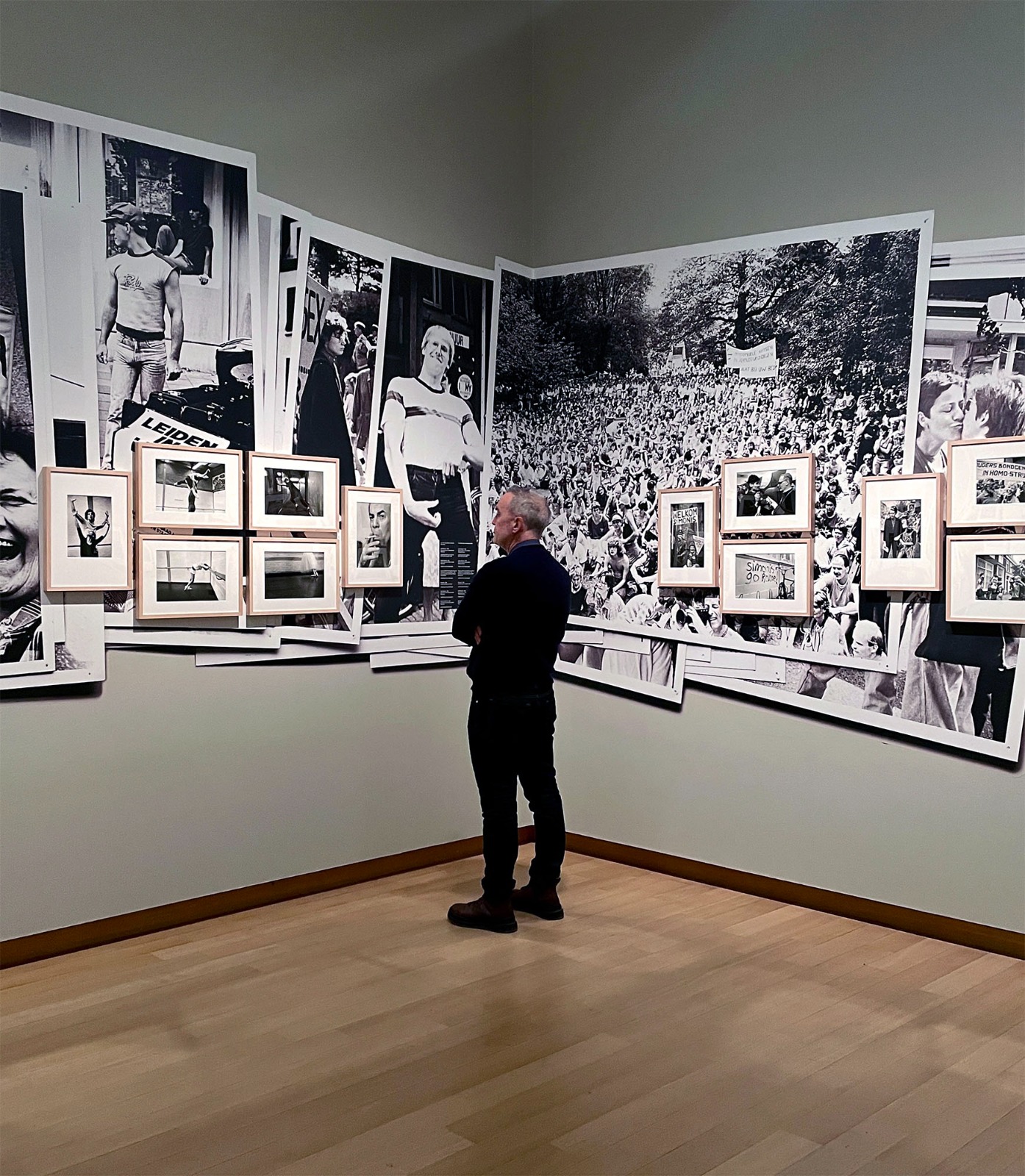 As soon as we arrived in Amsterdam, our first stop was Erwin Olaf's "Freedom" exhibition.
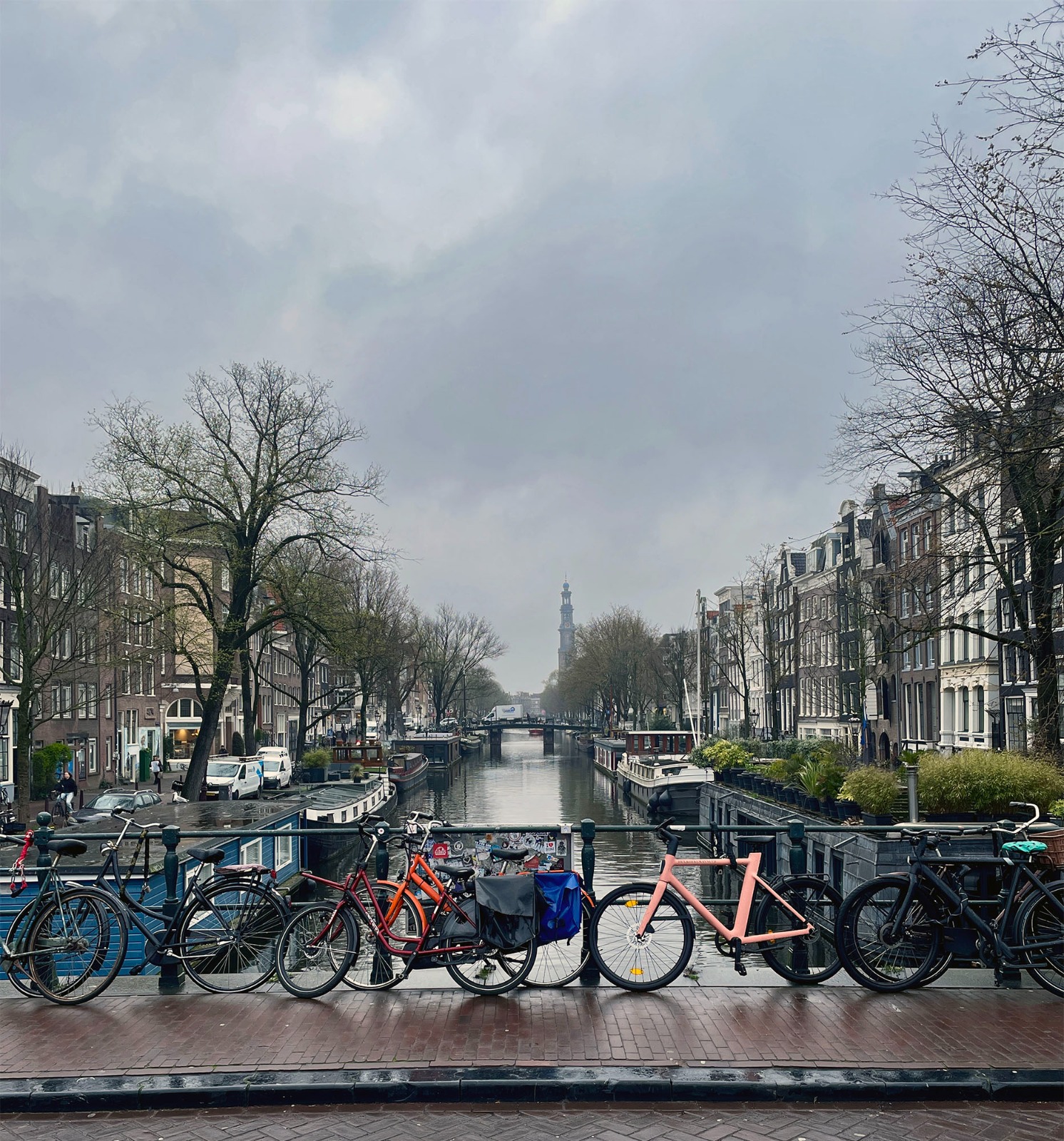 A classic canal and bicycles view was impossible not to capture.
Right after arriving in Amsterdam, things started with a small detour. My suitcase got lost at the airport, as passport control took unusually long. It turned out someone had accidentally taken it, thinking it was theirs. A report was filed, and just as we were leaving the airport an extra hour later, we got a call—the person who had taken it by mistake had already returned it. Luckily, the disruption started and ended right there.
From there, we went straight to the Stedelijk Museum next to our hotel and saw the retrospective of Erwin Olaf, a key figure in contemporary Dutch photography with strong international recognition. “Freedom” was the first museum retrospective since his unexpected passing two years ago, and what stood out most was how strongly his activist voice was foregrounded—something that felt both timely and very precise. It was also one of those exhibitions where you realise you didn’t actually “know” the work as well as you thought you did. We had been in touch with his studio years ago while working on Geniş Açı and published a series by him, and had often referred to his work in our later seminars, so encountering the exhibition carried a sense of familiarity—almost like meeting someone already known to us. In a way, Olaf became our first encounter with the city—an unexpected welcome through a familiar presence.
And that “encounter” continued quite literally just outside the museum, where we met Özge Baykan Calafato. This time in person —just a real, immediate meeting that turned into a warm hug before anything else. We know her from our Geniş Açı days, where she was one of the most active and generative voices in the magazine. She’s been based in Amsterdam for several years now and works as a researcher focusing on photography, archives, and memory and is the author of “Making the Modern Turkish Citizen: Vernacular Photography in the Early Republican Era”. After walking through the city, we ended up having Japanese & Caribbean vegan food, revisiting old times and getting a very welcome insider perspective on the local scene (plus a bit of photography-world gossip, obviously).
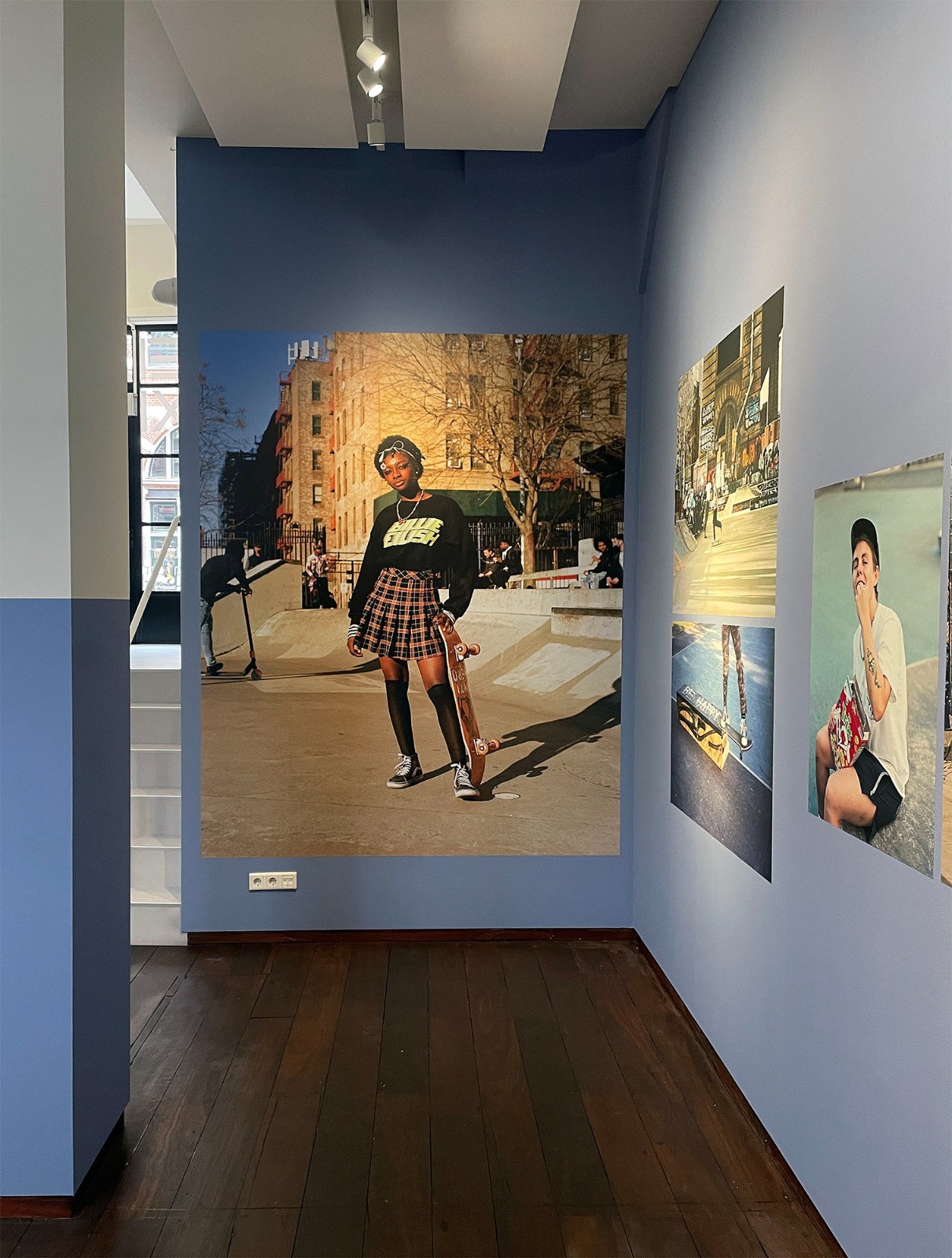 A view from "SK8GIRLS: Skateboarding..." exhibition at Melkweg Expo.
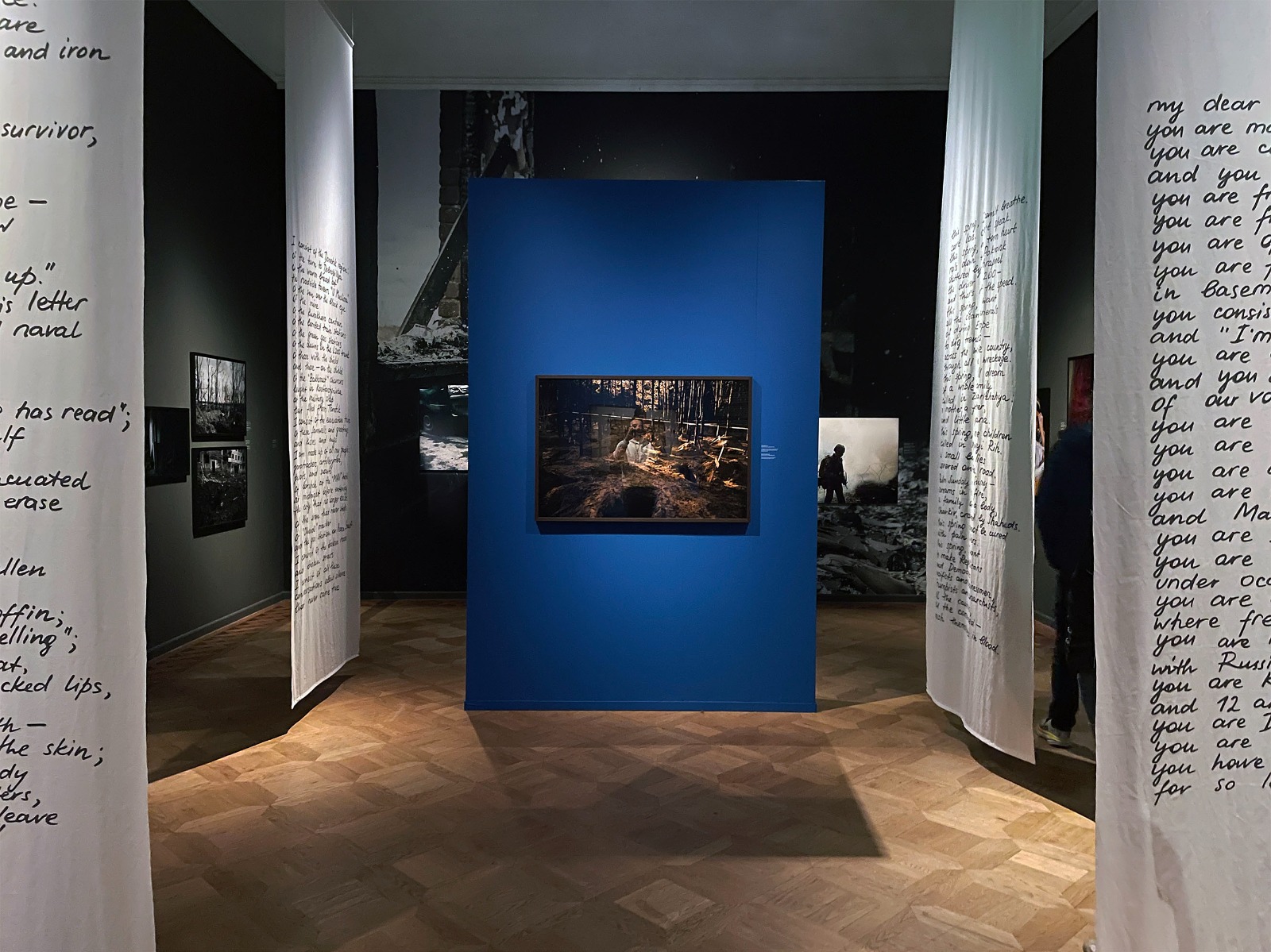 A view from Julia Kochetova's "War is Personal" exhibition at FOAM.
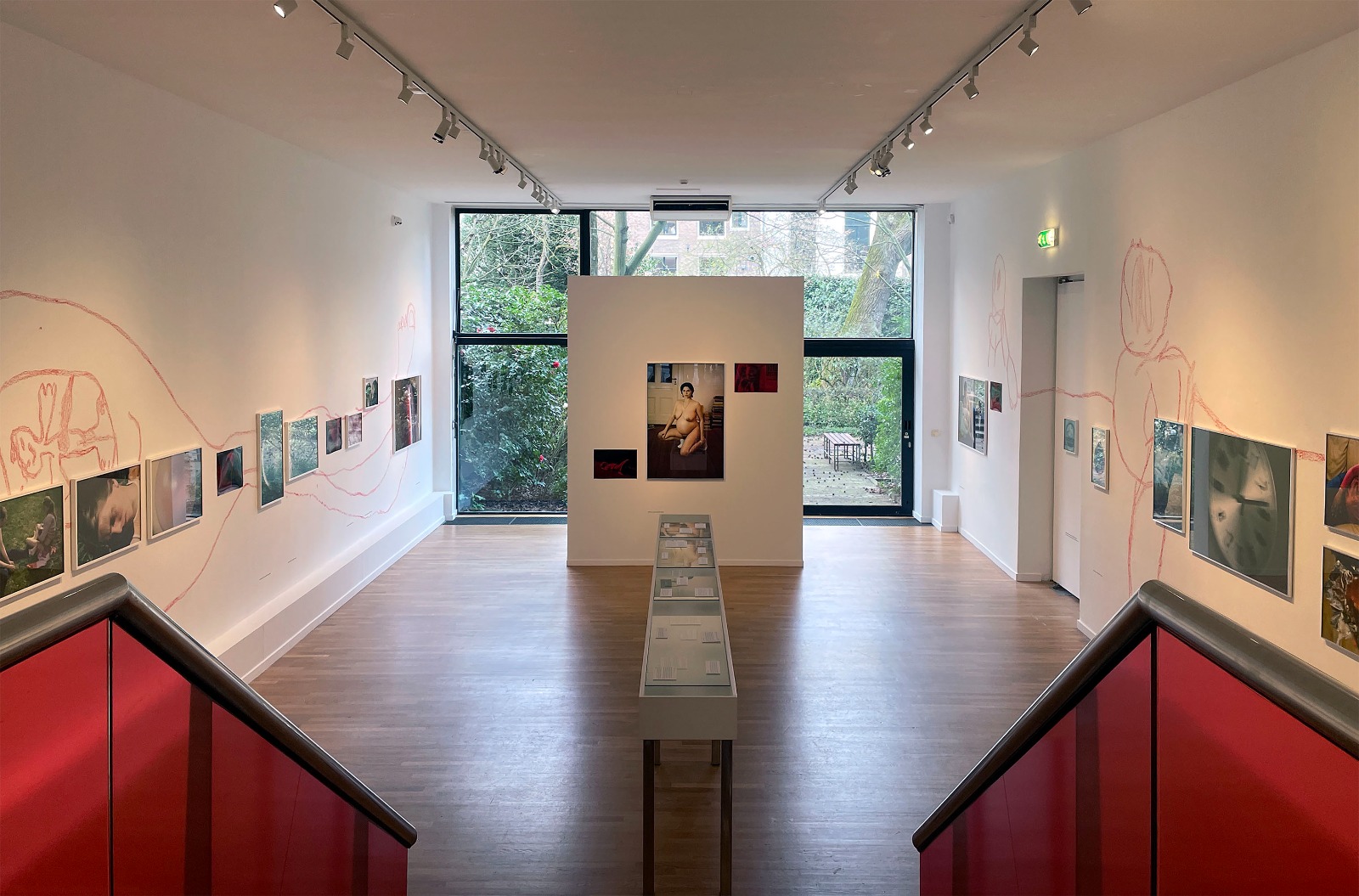 A view from Verena Blok's "Love Shit" exhibition at FOAM.
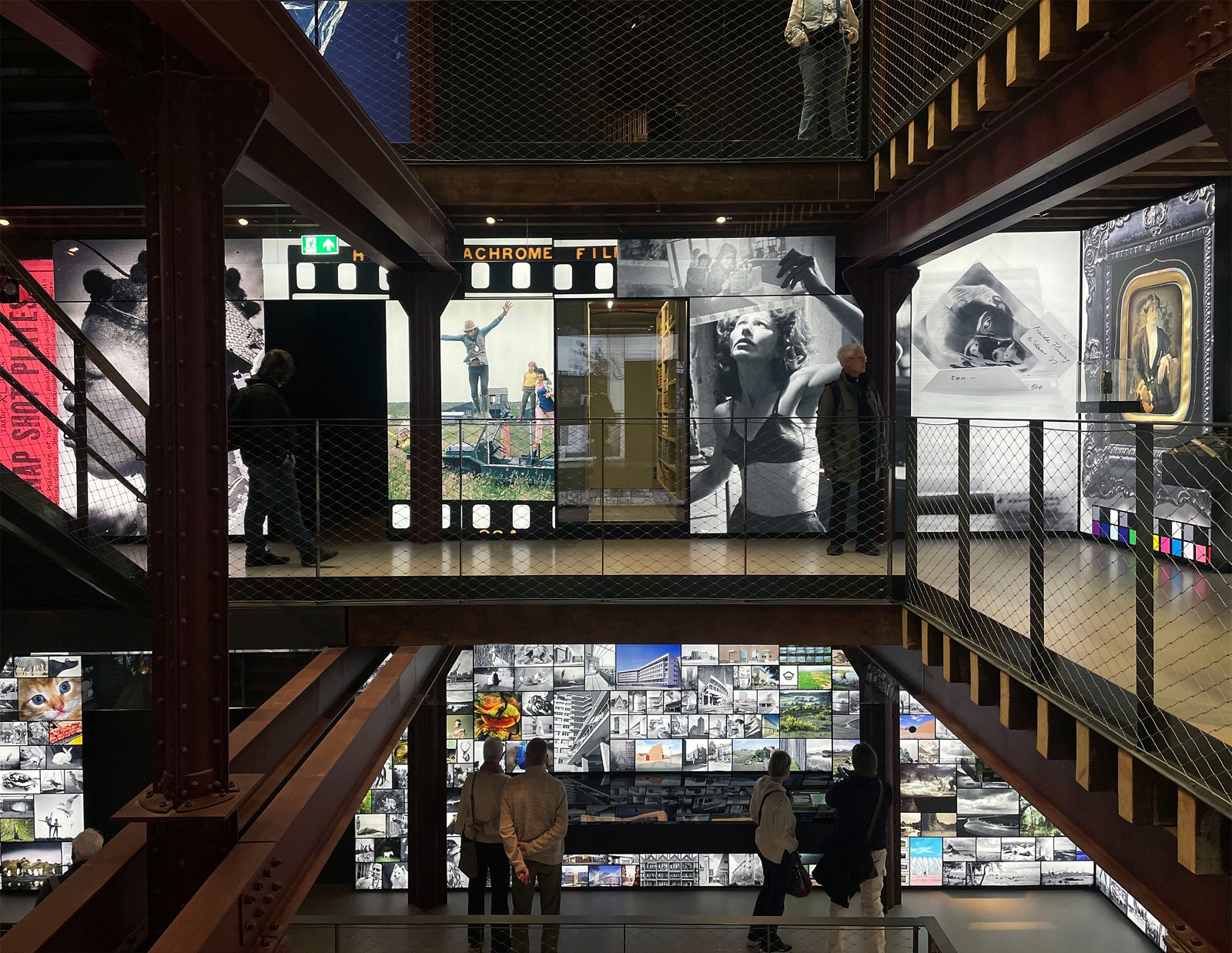 A captivating constellation unfolds at the Nederlands Fotomuseum.
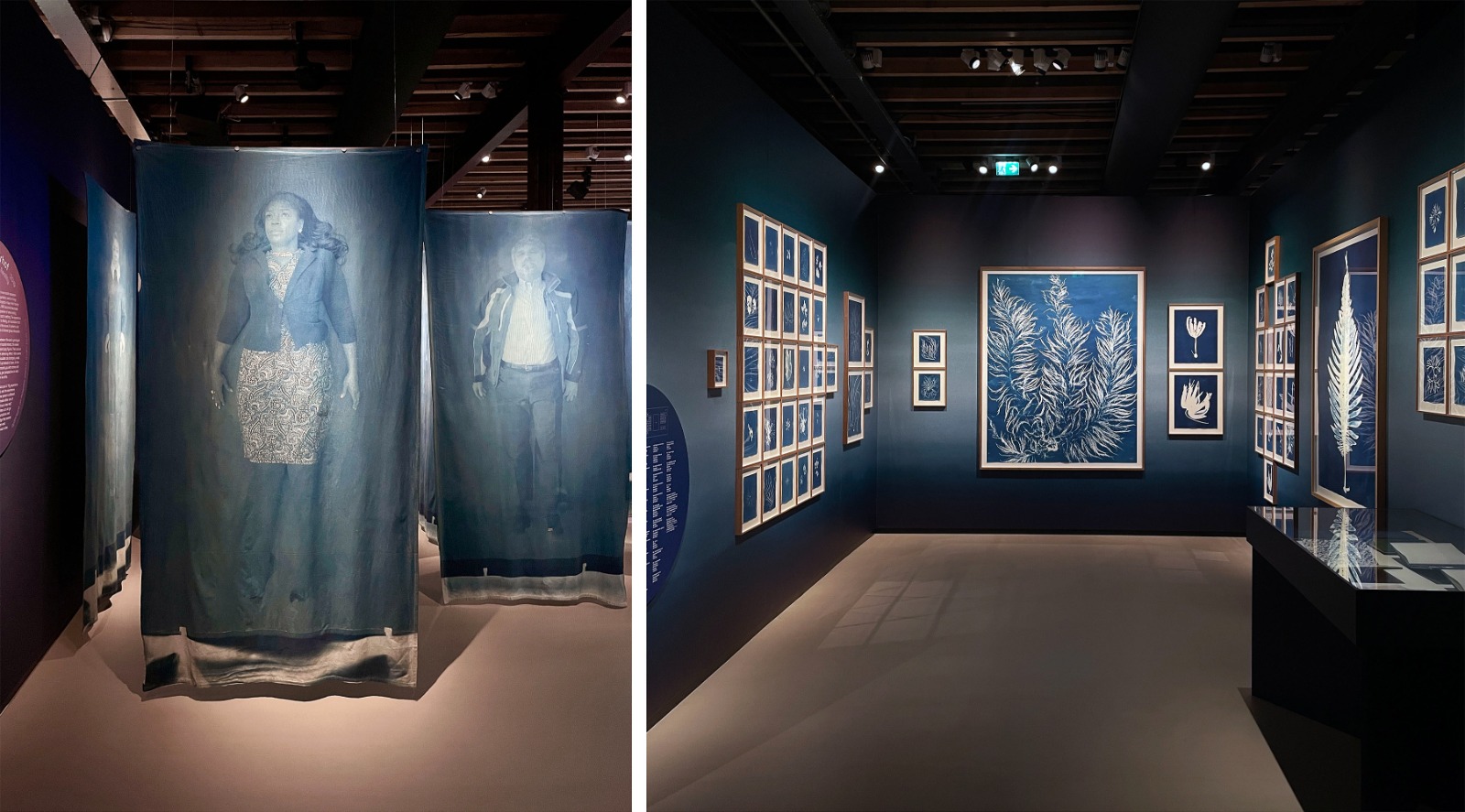 Views from the "Awakening in Blue" exhibition at Nederlands Fotomuseum.
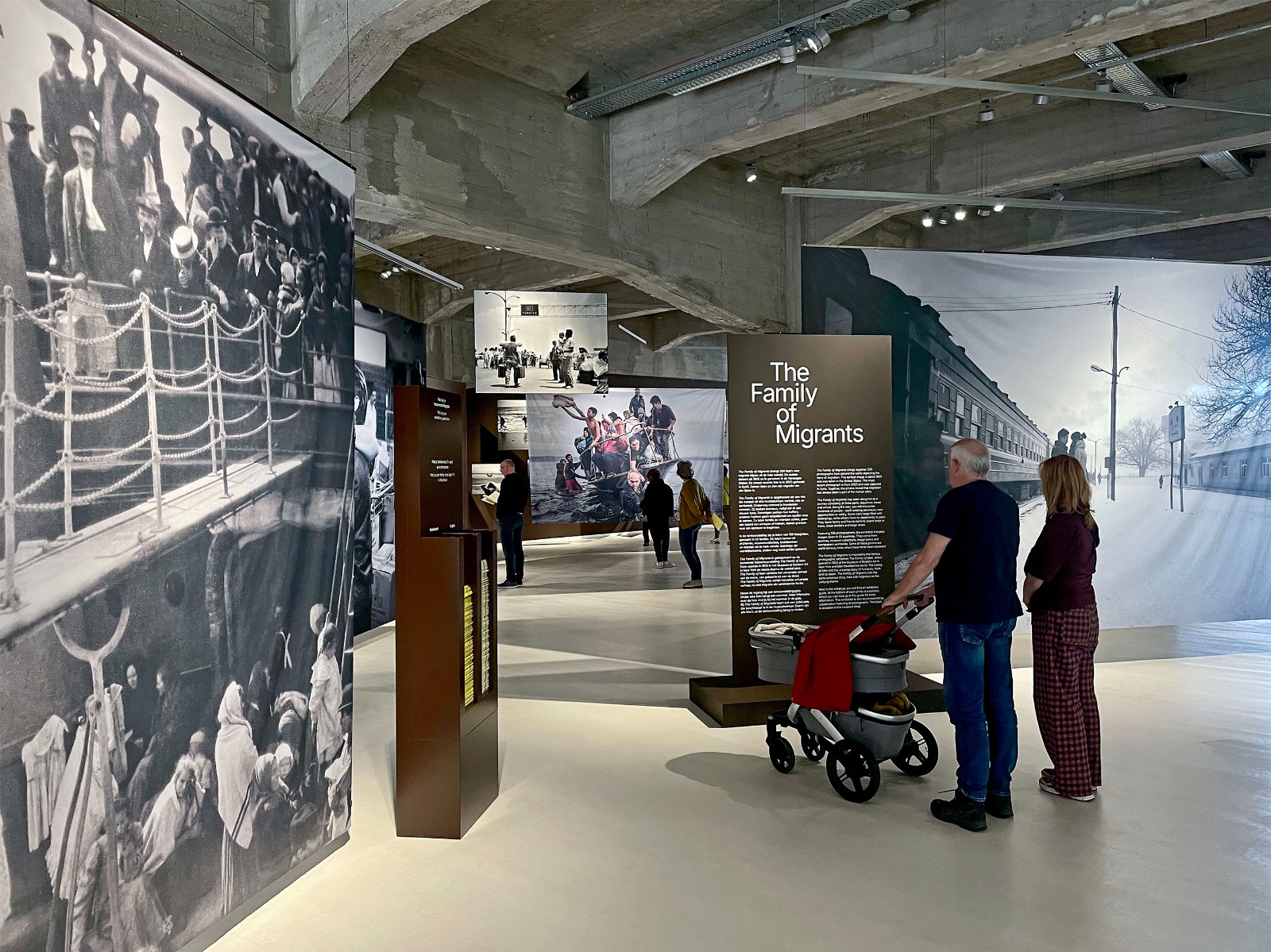 A view from the "The Family of Migrants" exhibition at FENIX.
The next day, with no meetings scheduled, we took a one-hour bus ride to Rotterdam. The weather, unusually, was on our side. We started at the Nederlands Fotomuseum, a major institution for Dutch photography and its ever-growing archive. What stood out was less individual exhibitions and more the museum’s approach to display: prints appear in dense, layered constellations, sometimes extending into transitional spaces, while illuminated panels add immediacy and rhythm. Among the exhibitions, “Awakening in Blue” stood out most—a show dedicated to cyanotype. It slowed everything down, focusing on light, chemistry, and time as part of image-making, and offered a very different rhythm compared to contemporary image production.
Just a few hundred meters away, we continued to the newly opened FENIX Museum of Migration. Housed in a restored harbour warehouse, the building itself is already part of the experience—carrying its industrial past while introducing a contemporary architectural layer that strongly shapes movement and perception inside. The exhibition “The Family of Migrants” brought together historical and contemporary images of migration across different contexts. What was particularly striking was the installation: photographs were suspended and printed on fabric, creating a spatial, almost floating experience rather than a wall-based display. Given the density of the material, this approach gave the exhibition both clarity and rhythm. FENIX was one of the highlights of the trip, both for its architecture and for how it rethinks exhibition-making through space and movement.
In Rotterdam, we also met a friend (S.K.) we first met last year in Tirana at the Anna Lindh Foundation forum, a performer and social theatre maker with an Egyptian-Dutch background, with whom the connection quickly carried over. We took a walk through the city centre, moving between conversations and the iconic Cube Houses, turning it into another effortless catch-up along the way—one of those encounters that quietly extend the trip’s informal networks.
On our last day in Amsterdam, we spent some time at the Rijksmuseum. Seeing works from across art history—especially the Rembrandts—is always a bit of a moment. There’s a certain kind of satisfaction there, somewhere between being an art lover and, well… working in culture. Less about discovering something new, and more about returning to what you know—while still finding something new in it. The rest of the day was left open, almost like a pause in the rhythm of the trip, spent walking around, drifting through the city, and letting things settle without any particular commitment.
We ended the evening over dinner with Özge and Kim Knoppers. Kim is an art historian and curator, and someone who has strong ties to Turkey—having lived for several years in Selçuk—and who also helped us a lot in setting up some of our meetings in Amsterdam. She had also previously conducted one of our seminar series at PLATFORM by GAPO.
The evening turned into a long, easy conversation—moving between life, work, and, inevitably, the Turkish photography scene. At some point, we realised we kept saying “next time we’ll go there” or “next time we’ll do that,” which led to the slightly absurd realisation that our last proper visit to Amsterdam had been 22 years ago. So yes, “next time in 22 years” became the running joke of the night.
Click here for Next Time (Hopefully Not) in 22 Years - Part 2
Next Time (Hopefully Not) in 22 Years - Part 1
Notes from Amsterdam & Rotterdam
11.05.2026
Between 16–23 March 2026, Serdar Darendeliler and Refik Akyüz travelled to Amsterdam, Rotterdam, and Paris as part of the VAHA Learning and Mobility Grant. Serdar not only sincerely shares his impressions and experiences with us, but also describes how vital and exhilarating it is to cross borders for cultural work.
“Next time in 22 years,” we joked at some point during the trip. It sounded funny, but it wasn’t entirely untrue—our last proper visit to Amsterdam had been more than two decades ago, and had lasted less than a day. Paris was a slightly different story. For many years, we used to go almost every year—almost like a routine part of our work and life rhythm. Since 2015, though, that rhythm had broken, and we hadn’t really been back in the same way—partly due to the pandemic, the increasingly difficult conditions for cultural work, and, well… life.
The trip became, in many ways, about reconnecting—both with people and institutions we had long been in dialogue with through Geniş Açı Photography Magazine and later through GAPO and PLATFORM by GAPO—and about encountering new ones along the way.
Returning allowed us not only to pick up these conversations in person, but also to see what had changed—new spaces, new names, new directions—and to get a closer sense of how these scenes are evolving today. At the same time, moving through exhibitions and encountering artists and works remained just as central—these moments of looking, thinking, and absorbing feeding directly into our own curatorial and editorial practice, beyond any formal meeting or exchange. So yes, we’ll be mentioning quite a few artists and exhibitions along the way, alongside the people, places, and conversations that shaped the trip as a whole. Here’s what unfolded along the way.
As soon as we arrived in Amsterdam, our first stop was Erwin Olaf's "Freedom" exhibition.
A classic canal and bicycles view was impossible not to capture. A Slightly Unexpected Welcome
Right after arriving in Amsterdam, things started with a small detour. My suitcase got lost at the airport, as passport control took unusually long. It turned out someone had accidentally taken it, thinking it was theirs. A report was filed, and just as we were leaving the airport an extra hour later, we got a call—the person who had taken it by mistake had already returned it. Luckily, the disruption started and ended right there.
From there, we went straight to the Stedelijk Museum next to our hotel and saw the retrospective of Erwin Olaf, a key figure in contemporary Dutch photography with strong international recognition. “Freedom” was the first museum retrospective since his unexpected passing two years ago, and what stood out most was how strongly his activist voice was foregrounded—something that felt both timely and very precise. It was also one of those exhibitions where you realise you didn’t actually “know” the work as well as you thought you did. We had been in touch with his studio years ago while working on Geniş Açı and published a series by him, and had often referred to his work in our later seminars, so encountering the exhibition carried a sense of familiarity—almost like meeting someone already known to us. In a way, Olaf became our first encounter with the city—an unexpected welcome through a familiar presence.
And that “encounter” continued quite literally just outside the museum, where we met Özge Baykan Calafato. This time in person —just a real, immediate meeting that turned into a warm hug before anything else. We know her from our Geniş Açı days, where she was one of the most active and generative voices in the magazine. She’s been based in Amsterdam for several years now and works as a researcher focusing on photography, archives, and memory and is the author of “Making the Modern Turkish Citizen: Vernacular Photography in the Early Republican Era”. After walking through the city, we ended up having Japanese & Caribbean vegan food, revisiting old times and getting a very welcome insider perspective on the local scene (plus a bit of photography-world gossip, obviously).
A view from "SK8GIRLS: Skateboarding..." exhibition at Melkweg Expo.
A view from Julia Kochetova's "War is Personal" exhibition at FOAM.
A view from Verena Blok's "Love Shit" exhibition at FOAM.
The second day started with a meeting at Melkweg Expo with Fleurie Kloostra, the curator of visual arts. As part of the larger Melkweg Amsterdam complex, the space brings together music, performance, and visual culture, with a strong focus on photography and emerging artists. We talked about their programme, their approach to working with emerging practitioners, and their talent development initiatives. At some point the conversation naturally shifted to “could we do something together, probably some kind of an exchange?”—which is always a good sign. Nothing fixed, but definitely an open door. (During our visit, we also saw the exhibition “SK8GIRLS: Skateboarding as Act of Resistance”, which explored skateboarding culture through themes of gender, visibility, and resistance.)
Later that day, we met with Claartje van Dijk, the senior curator from FOAM. We had first met a few years ago in Turkey during their Kısmet project, a curated programme on Turkish visual culture bringing together exhibitions, publications, and other formats, to which we had also contributed with two texts, so this was very much a follow-up moment. We talked about FOAM’s ongoing renovation, current exhibitions, and what’s coming next, but also just caught up—on people, projects, and everything in between. We walked through the exhibitions (five of them, so can't mention them all here) together, and the conversation kind of continued as we moved. There was also a small exchange of recent publications, and yes, a FOAM tote bag entered our lives—which has since turned into an ongoing (and unresolved) dispute between Refik and me.
At some point during the day, we also visited the Huis Marseille Museum for Photography. It’s a bit more low-key compared to some of the bigger names, but consistently strong in what it shows. The building itself—a canal house with a quiet garden—shapes the whole experience in a very subtle way. It’s one of those places where you slow down without really noticing. Here, we saw “Body as Resistance”, the first solo museum exhibition of Yumna Al-Arashi, whose work we were glad to discover for the first time, alongside “Designed World: Through the Eyes of Tata Ronkholz”, a long-overdue retrospective of the Kunstakademie Düsseldorf photographer whose work I had previously encountered and admired at the Photoszene Festival in Cologne last year.
Later that day, we met with Claartje van Dijk, the senior curator from FOAM. We had first met a few years ago in Turkey during their Kısmet project, a curated programme on Turkish visual culture bringing together exhibitions, publications, and other formats, to which we had also contributed with two texts, so this was very much a follow-up moment. We talked about FOAM’s ongoing renovation, current exhibitions, and what’s coming next, but also just caught up—on people, projects, and everything in between. We walked through the exhibitions (five of them, so can't mention them all here) together, and the conversation kind of continued as we moved. There was also a small exchange of recent publications, and yes, a FOAM tote bag entered our lives—which has since turned into an ongoing (and unresolved) dispute between Refik and me.
At some point during the day, we also visited the Huis Marseille Museum for Photography. It’s a bit more low-key compared to some of the bigger names, but consistently strong in what it shows. The building itself—a canal house with a quiet garden—shapes the whole experience in a very subtle way. It’s one of those places where you slow down without really noticing. Here, we saw “Body as Resistance”, the first solo museum exhibition of Yumna Al-Arashi, whose work we were glad to discover for the first time, alongside “Designed World: Through the Eyes of Tata Ronkholz”, a long-overdue retrospective of the Kunstakademie Düsseldorf photographer whose work I had previously encountered and admired at the Photoszene Festival in Cologne last year.
A captivating constellation unfolds at the Nederlands Fotomuseum.
Views from the "Awakening in Blue" exhibition at Nederlands Fotomuseum.
A view from the "The Family of Migrants" exhibition at FENIX. The next day, with no meetings scheduled, we took a one-hour bus ride to Rotterdam. The weather, unusually, was on our side. We started at the Nederlands Fotomuseum, a major institution for Dutch photography and its ever-growing archive. What stood out was less individual exhibitions and more the museum’s approach to display: prints appear in dense, layered constellations, sometimes extending into transitional spaces, while illuminated panels add immediacy and rhythm. Among the exhibitions, “Awakening in Blue” stood out most—a show dedicated to cyanotype. It slowed everything down, focusing on light, chemistry, and time as part of image-making, and offered a very different rhythm compared to contemporary image production.
Just a few hundred meters away, we continued to the newly opened FENIX Museum of Migration. Housed in a restored harbour warehouse, the building itself is already part of the experience—carrying its industrial past while introducing a contemporary architectural layer that strongly shapes movement and perception inside. The exhibition “The Family of Migrants” brought together historical and contemporary images of migration across different contexts. What was particularly striking was the installation: photographs were suspended and printed on fabric, creating a spatial, almost floating experience rather than a wall-based display. Given the density of the material, this approach gave the exhibition both clarity and rhythm. FENIX was one of the highlights of the trip, both for its architecture and for how it rethinks exhibition-making through space and movement.
In Rotterdam, we also met a friend (S.K.) we first met last year in Tirana at the Anna Lindh Foundation forum, a performer and social theatre maker with an Egyptian-Dutch background, with whom the connection quickly carried over. We took a walk through the city centre, moving between conversations and the iconic Cube Houses, turning it into another effortless catch-up along the way—one of those encounters that quietly extend the trip’s informal networks.
On our last day in Amsterdam, we spent some time at the Rijksmuseum. Seeing works from across art history—especially the Rembrandts—is always a bit of a moment. There’s a certain kind of satisfaction there, somewhere between being an art lover and, well… working in culture. Less about discovering something new, and more about returning to what you know—while still finding something new in it. The rest of the day was left open, almost like a pause in the rhythm of the trip, spent walking around, drifting through the city, and letting things settle without any particular commitment.
We ended the evening over dinner with Özge and Kim Knoppers. Kim is an art historian and curator, and someone who has strong ties to Turkey—having lived for several years in Selçuk—and who also helped us a lot in setting up some of our meetings in Amsterdam. She had also previously conducted one of our seminar series at PLATFORM by GAPO.
The evening turned into a long, easy conversation—moving between life, work, and, inevitably, the Turkish photography scene. At some point, we realised we kept saying “next time we’ll go there” or “next time we’ll do that,” which led to the slightly absurd realisation that our last proper visit to Amsterdam had been 22 years ago. So yes, “next time in 22 years” became the running joke of the night.
Click here for Next Time (Hopefully Not) in 22 Years - Part 2
Share:

 Share:
Share:
